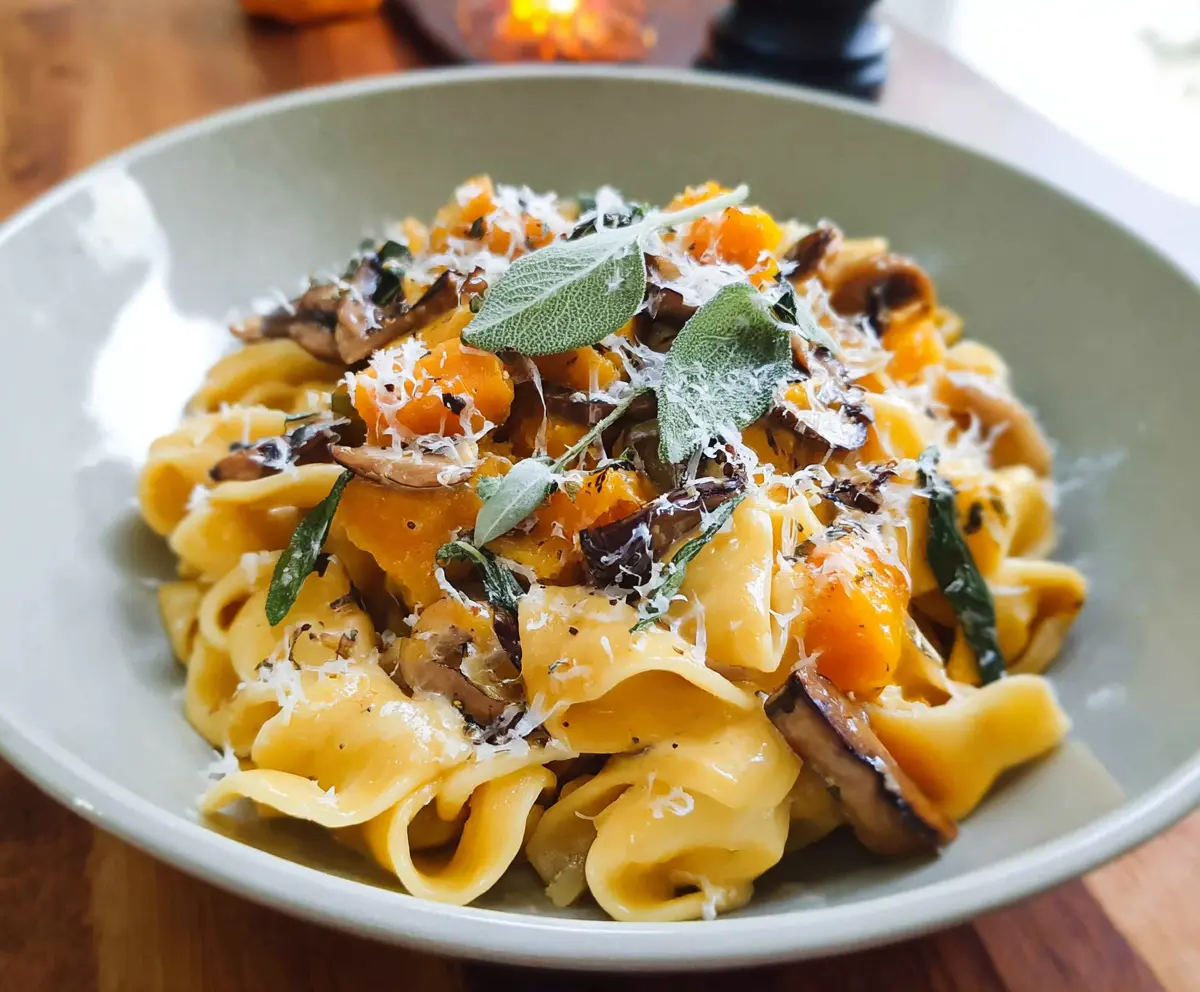
This Butternut Squash Pasta is a cozy and colorful dish that combines creamy squash with your favorite pasta. It’s a lovely way to enjoy a comforting meal!
Seriously, who knew veggies could be this fun? I love adding a sprinkle of cheese on top—it makes everything taste even better! Plus, it’s super easy to whip up.
Key Ingredients & Substitutions
Pasta: Pappardelle gives a nice texture, but any wide pasta like fettuccine or even gluten-free pasta works well if you’re avoiding gluten.
Butternut Squash: This is key for flavor. If you can’t find it, you can substitute with pumpkin or acorn squash. Pre-cut options can save you some time, too!
Mushrooms: I like cremini for their depth of flavor, but you can easily swap these for shiitake or even regular button mushrooms if cremini isn’t available.
Parmesan Cheese: Freshly grated is best for flavor, but you can use Pecorino Romano as a substitute if you want something a bit different.
Sage: Fresh sage creates a beautiful aroma, but dried sage is a quick alternative—just use less.
How Do I Get the Butternut Squash Perfectly Tender?
Cooking butternut squash can be tricky, but there’s a simple method! When dicing, ensure pieces are uniform so they cook evenly. You can choose to roast or sauté them. Roasting gives a caramelized flavor, while sautéing works faster!
- For sautéing, cook in a skillet with oil until tender after about 10-12 minutes. Stir occasionally to prevent sticking.
- If you roast, spread cubes on a baking sheet, drizzle with oil, and bake at 400°F (200°C) for 20-25 minutes until they are golden and soft.
Don’t forget to season with salt and pepper as they cook—flavor is key!
What’s the Best Way to Make a Creamy Sauce?
The creamy sauce is where all the flavors meld together! After cooking the garlic in the butter, lightly mash some of the butternut squash into the mix. This builds a naturally creamy base.
If the sauce seems too thick, gradually add little splashes of reserved pasta water or broth until you reach the desired consistency. This will help the sauce cling nicely to the pasta!
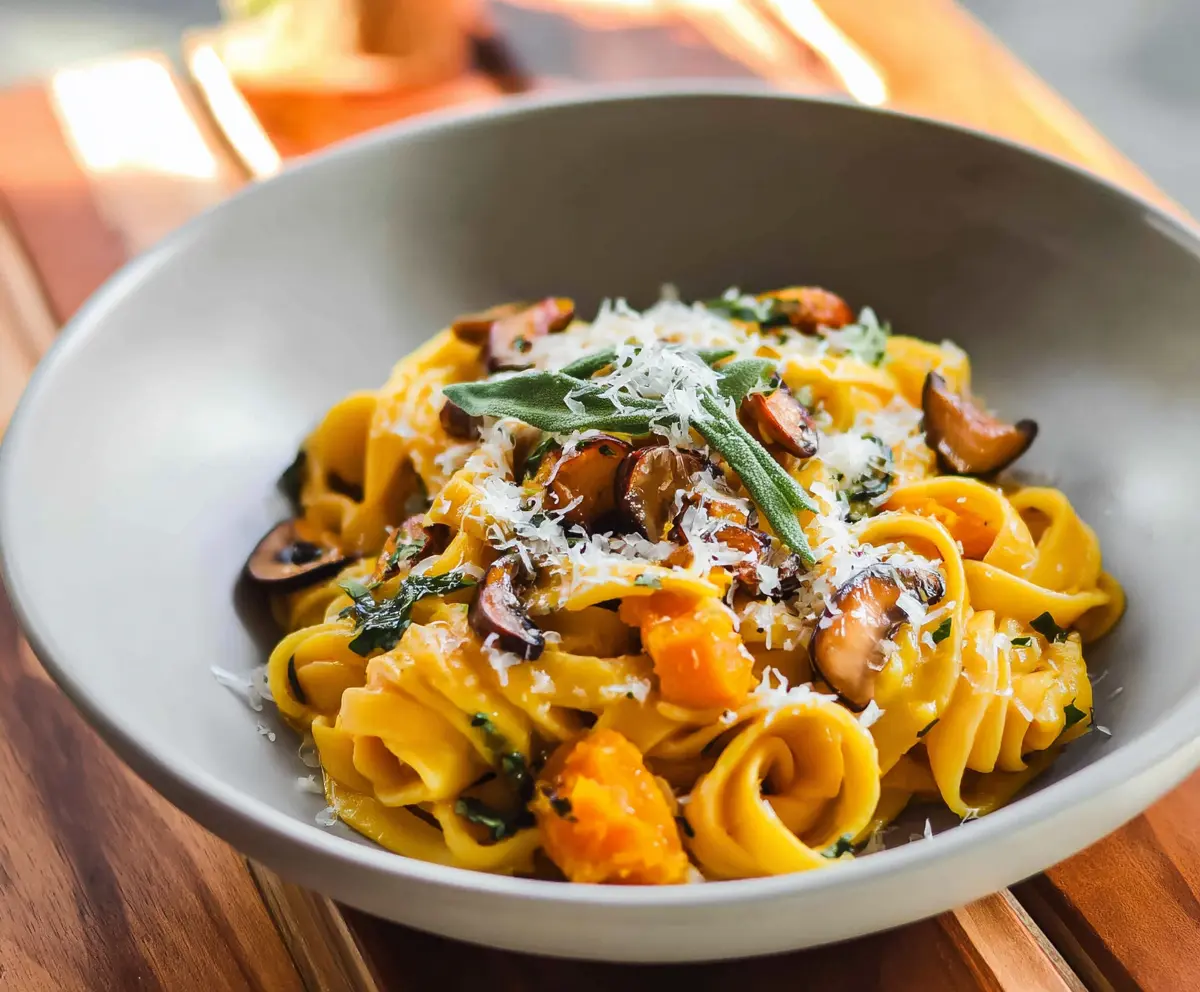
Butternut Squash Pasta
Ingredients You’ll Need:
For the Pasta:
- 12 oz (340 g) pappardelle or wide egg pasta
For the Butternut Squash:
- 1 medium butternut squash, peeled, seeded, and diced into small cubes
For the Mushrooms:
- 8 oz (225 g) cremini or baby bella mushrooms, sliced
For the Sauce:
- 2 tbsp olive oil (plus more for frying sage)
- 3 tbsp unsalted butter
- 2 cloves garlic, minced
- 1/2 cup grated Parmesan cheese, plus extra for serving
- 1/4 cup vegetable or chicken broth (optional, for sauce thinning)
- Fresh sage leaves (about 12-15), some whole for garnish
- Salt and black pepper, to taste
How Much Time Will You Need?
This delightful dish requires about 35-40 minutes to prepare. You’ll spend roughly 10-15 minutes cooking the pasta and an additional 15-20 minutes to sauté the veggies and make the creamy sauce. It’s a perfect recipe for a cozy dinner!
Step-by-Step Instructions:
1. Cook the Pasta:
Start by bringing a large pot of salted water to a boil. Once it’s bubbling, add the pappardelle and cook according to the package instructions until it’s al dente. Remember to save about 1 cup of that pasta cooking water before draining. Set the drained pasta aside for later.
2. Roast or Sauté the Butternut Squash:
In a large skillet over medium heat, add 1 tablespoon of olive oil. Toss in the diced butternut squash and sprinkle on some salt and pepper. Sauté the squash, stirring occasionally, for about 10-12 minutes until it’s tender and starting to brown. Once done, remove the squash from the skillet and set it aside.
3. Cook the Mushrooms:
In the same skillet, add another tablespoon of olive oil. Add the sliced mushrooms and season them with salt and pepper. Sauté the mushrooms for about 6-8 minutes until they are browned and tender. Once they’re cooked, remove them from the skillet and keep with the squash.
4. Prepare the Sage Butter Sauce:
In the same skillet, melt the butter over medium heat. Add the fresh sage leaves and fry them gently until they become crispy, about 2-3 minutes. Remove the crispy sage and set it aside to use as a garnish later.
5. Make the Creamy Sauce:
Add the minced garlic to the melted butter and cook until it smells lovely and fragrant, about 30 seconds. Now return the butternut squash to the pan and lightly mash a few cubes with the back of your spoon to help create a nice sauce texture. If the mixture looks too thick, add a splash of broth or some reserved pasta water to loosen it up a bit.
6. Combine Pasta with the Sauce:
Now it’s time to bring everything together! Toss the cooked pasta into the skillet with the squash sauce. Stir in the cooked mushrooms and the grated Parmesan cheese. Mix everything well, and feel free to add more pasta water if you want a creamier sauce. Adjust the seasoning with salt and pepper to your taste.
7. Serve Up Your Dish:
Plate the pasta and finish it off by garnishing with those crispy sage leaves you set aside. Don’t forget a generous sprinkle of freshly grated Parmesan cheese and a twist of freshly ground black pepper on top!
This Butternut Squash Pasta is a comforting and vibrant dish—enjoy the sweet creaminess of the squash, the earthy flavors of the mushrooms, and the aromatic crispy sage!
Can I Use Different Types of Pasta?
Absolutely! While pappardelle works beautifully, you can use any wide pasta like fettuccine or even gluten-free pasta if you prefer. Just adjust the cooking time as needed.
Can I Make This Pasta Vegan?
Yes! To make this dish vegan, you can substitute the butter with plant-based butter or olive oil, and skip the Parmesan cheese or use a vegan cheese alternative to maintain creaminess and flavor.
How Do I Store Leftovers?
Store any leftovers in an airtight container in the fridge for up to 3 days. To reheat, simply warm gently on the stove or in the microwave. If the pasta looks dry, add a splash of broth or water to revive the sauce.
What If I Can’t Find Fresh Sage?
If fresh sage isn’t available, you can use dried sage as a substitute! Just remember to use less since dried herbs are more concentrated. Start with about 1 teaspoon and adjust to taste, adding it with the garlic for flavor.