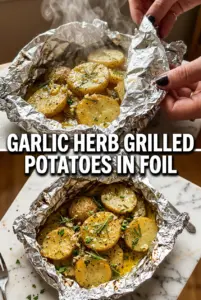
Golden potatoes with crisp edges and a buttery garlic-herb coating are hard to beat, and foil packets on the grill give you exactly that without babysitting a pan. The potatoes steam in their own little bundle at first, then finish with enough direct heat to pick up a little color and take on that deep savory flavor from the garlic, butter, and herbs.
What makes this version work is the balance between fat and moisture. Olive oil helps the potatoes stay coated and keeps the herbs from scorching, while melted butter adds richness and helps the seasoning cling. Cutting the potatoes into even pieces matters more than most people think; if the chunks are mismatched, you end up with some that are tender and others that are still firm in the middle.
Below, I’ll walk through the detail that matters most: how to seal the packets so the potatoes steam first without turning soggy, plus the small timing tweak that keeps them tender instead of dry.
The potatoes came out perfectly tender with those buttery garlic edges, and the packets kept everything moist without getting mushy. I added the Parmesan at the end and it melted right onto the hot potatoes.
Save these garlic herb grilled potatoes in foil for the next time you need a smoky, buttery side with almost no cleanup.
The Packet Seal That Keeps the Potatoes Tender, Not Watery
Foil packets work because they trap steam, but that same steam can turn against you if the packets are sealed too loosely or stacked with too much empty space. The potatoes need a tight crimp so the hot air and butter stay around the food long enough to soften the centers before the grill’s direct heat starts doing its job.
If your potatoes come out dry on the edges and firm in the middle, the grill was probably too hot or the packets were spread too thin across the grate. A medium-high grill is hot enough to cook through in about 25 to 30 minutes, but not so aggressive that the foil scorches before the potatoes have a chance to tenderize.
- Heavy-duty foil — This matters more than the brand name. Thin foil tears when you flip the packets, and any leak means you lose steam and end up with potatoes that brown unevenly.
- Baby potatoes — Their size makes them ideal for grilling because they cook evenly and keep a creamy texture inside. If you use larger potatoes, cut them into smaller, even chunks so nothing lags behind.
- Fresh herbs — Parsley, rosemary, and thyme each bring something different: freshness, piney depth, and an earthy finish. Dried herbs can work in a pinch, but use less because they concentrate as they cook.
- Butter and olive oil together — Oil helps the coating spread, while butter gives the finished potatoes that rich, savory edge. Butter alone can brown too fast on the grill; the oil keeps it steady.
What Each Ingredient Is Actually Doing in the Packet
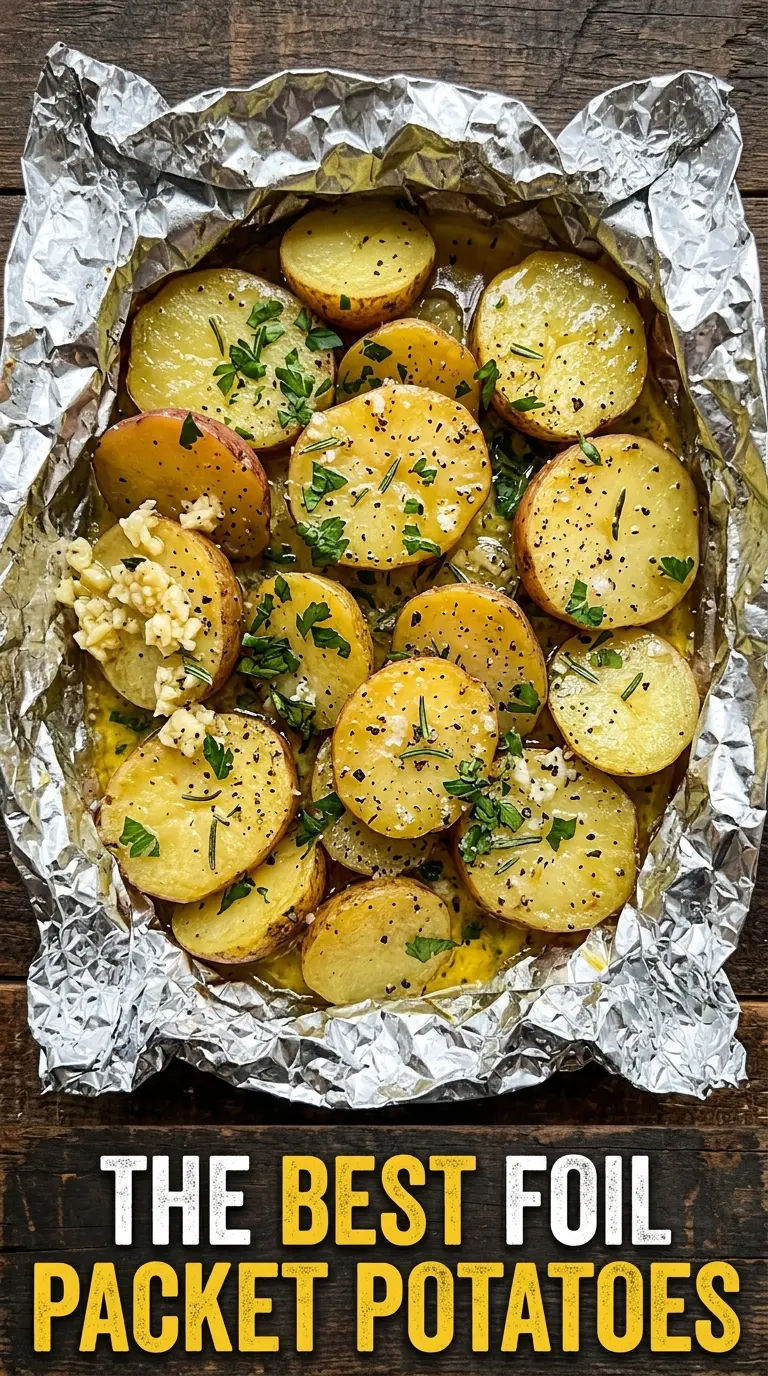
- Baby potatoes — These hold their shape better than starchy potatoes and give you a tender, creamy bite without falling apart. Red or yellow baby potatoes both work well.
- Garlic — Fresh minced garlic is what gives the packets their punch. Garlic powder won’t give the same sharp, buttery aroma, but it can stand in if that’s all you have; use about 1 teaspoon.
- Fresh parsley, rosemary, and thyme — This combination gives the potatoes a layered herb flavor instead of a flat “seasoned” taste. Chop the rosemary finely so it doesn’t feel woody in the finished dish.
- Parmesan — Optional, but it adds a salty finish and clings nicely to the hot potatoes after the packets open. If you use it, add it at the end so it doesn’t dry out or melt into the foil.
How to Build the Packets So the Potatoes Cook Evenly
Coating the Potatoes First
Mix the olive oil, melted butter, garlic, herbs, salt, and pepper before the potatoes go in. That way every piece gets a full coating instead of leaving the seasonings pooled at the bottom of the bowl. Toss until the potatoes look glossy and every cut side has some of the herb mixture stuck to it. If the bowl looks dry, the potatoes will taste spotty instead of seasoned all the way through.
Sealing for Steam, Not Soggy Bottoms
Divide the potatoes into even portions on the foil sheets, then fold the foil over and crimp the edges tightly. Leave a little room inside for steam to circulate, but don’t make the packet loose enough for the butter to run out. If the seams aren’t tight, the potatoes dry out before the centers soften.
Grilling Until Tender
Set the packets over medium-high heat and flip them halfway through cooking. You’re looking for tender potatoes that yield easily when pierced through the foil with a fork or knife tip. If the grill runs hot, check them a few minutes early; overcooked potatoes don’t get crisp, they just turn mealy and dry. Open the packets carefully because the steam inside will hit hard.
Finishing While They’re Hot
Once the packets are open, sprinkle on Parmesan if you’re using it and serve right away. The cheese melts best on the hot potatoes, and the herbs taste brightest in that first minute after the foil comes off. If you let them sit open too long, you lose the steam that keeps the centers soft and the butter glossy.
Three Ways to Make These Foil Packet Potatoes Fit Your Table
Dairy-Free Herb Potatoes
Skip the butter and use all olive oil instead. You’ll lose a little of the rich finish, but the garlic and herbs still come through cleanly, and the potatoes stay tender. Add the Parmesan only if dairy isn’t an issue.
No-Fuss Garlic and Rosemary Version
Use only garlic, rosemary, salt, pepper, olive oil, and butter if that’s what you have on hand. The flavor will be a little sharper and more rustic, which works well next to grilled chicken or steak.
Oven-Baked Foil Packet Potatoes
Bake the sealed packets on a sheet pan at 425°F if you’re not grilling. The texture stays close to the grill version, but you won’t get the slight smoky edge that comes from cooking over flame.
Storage and Reheating
- Refrigerator: Store leftovers in an airtight container for up to 4 days. The potatoes soften a little more after chilling, but the flavor stays good.
- Freezer: I don’t recommend freezing these. Potatoes change texture after thawing and turn grainy instead of creamy.
- Reheating: Warm them in a skillet over medium heat or in a 375°F oven until hot. The common mistake is microwaving them too long, which makes the edges rubbery before the centers heat through.
Answers to the Questions Worth Asking
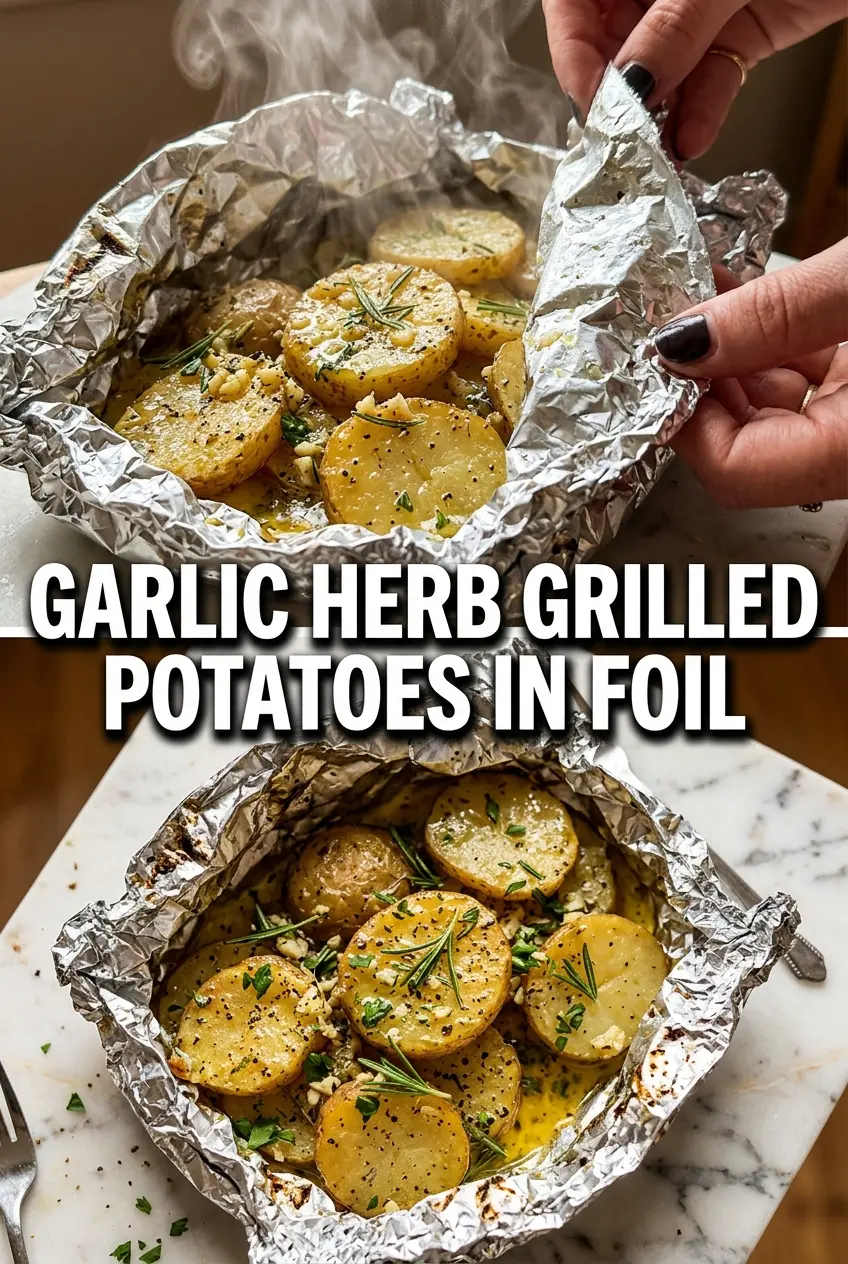
Garlic Herb Grilled Potatoes in Foil
Ingredients
Equipment
Method
- In a large bowl, combine olive oil, melted butter, minced garlic, chopped parsley, chopped rosemary, thyme leaves, salt, and pepper.
- Stir until the herbs and garlic are evenly distributed and the mixture looks glossy.
- Toss halved or quartered baby potatoes in the herb mixture until every piece is well coated.
- Divide the potatoes among 4 to 6 large pieces of heavy-duty aluminum foil.
- Fold and seal the foil into tight packets, crimping edges securely so steam stays inside.
- Grill over medium-high heat for 25 to 30 minutes, flipping the packets halfway through.
- Check for doneness by ensuring the potatoes are tender when pierced through the foil.
- Carefully open the packets and let the steam escape.
- Sprinkle with grated Parmesan cheese if desired, then serve the garlic herb potatoes hot.