Filipino BBQ pork comes off the grill with sticky edges, smoky char, and that sweet-savory glaze that clings to every bite. The best skewers stay juicy in the center while the outside caramelizes into a lacquered crust that tastes like it took all day, even though the grill does most of the work once the pork is marinated.
What makes this version worth making is the balance in the marinade. Banana ketchup brings sweetness and body, soy sauce brings salt and depth, and lemon juice keeps the pork from tasting heavy. Brown sugar helps the glaze darken fast over heat, so the skewers pick up color without drying out. Thin slices of pork shoulder matter here because they cook quickly and stay tender long enough to get that proper char.
Below, I’ll walk through the one marinating mistake that keeps people from getting real barbecue flavor, plus the small grilling adjustments that help the skewers caramelize instead of burn.
The marinade made the pork tender all the way through, and the glaze browned beautifully without burning. I threaded the slices tightly and the skewers stayed juicy even after the second flip.
These Filipino BBQ pork skewers get their glossy char from banana ketchup and brown sugar, so they’re worth saving for your next grill night.
The Marinade Needs Time to Sink In, Not Just Coat the Outside
With pork skewers, the biggest mistake is treating the marinade like a sauce you brush on at the end. The sugar, salt, and acid need time to work into the sliced pork so the meat tastes seasoned all the way through, not just sticky on the surface. Four hours is the minimum here, but overnight gives you the deepest flavor and the best tenderness.
Thin slices of pork shoulder are doing a lot of work. They expose more surface area to the marinade and cook fast enough to pick up char before they dry out. If the slices are cut too thick, the outside can burn before the center finishes, and if the pork is too lean, it can turn firm instead of juicy.
What Each Ingredient Is Actually Doing in These Skewers
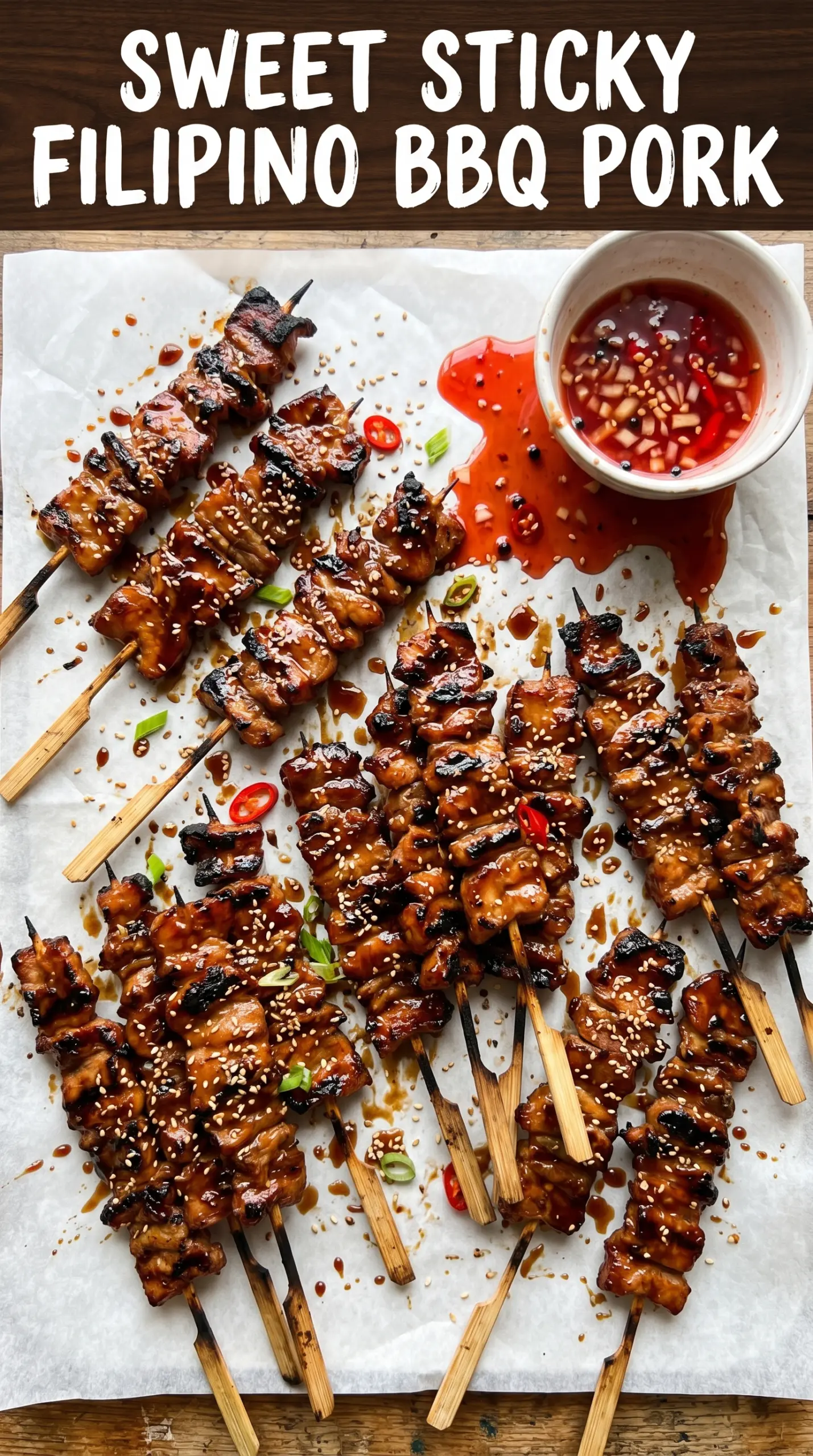
- Pork shoulder — This is the cut that keeps the skewers tender after grilling. It has enough fat to stay juicy under high heat, which lean pork can’t match. Slice it thin across the grain so it cooks evenly and stays easy to bite.
- Banana ketchup — This gives the glaze its signature sweetness, color, and cling. Regular ketchup works in a pinch, but it’s sharper and less rounded, so the skewers lose some of that classic Filipino barbecue character.
- Soy sauce and fish sauce — These build the salty backbone. Soy sauce seasons the meat cleanly, while fish sauce adds depth that tastes fuller than salt alone. If you swap fish sauce for more soy sauce, the flavor gets flatter, though the skewers will still work.
- Brown sugar — This helps the marinade caramelize fast on the grill. It also balances the acid in the lemon juice. Light brown sugar is fine; dark brown sugar gives a deeper molasses note.
- Lemon juice or calamansi juice — Acid keeps the marinade bright and helps the pork taste lively instead of one-note sweet. Calamansi is the most traditional and gives a sharper citrus finish, but lemon juice is the most practical substitute.
- Garlic and black pepper — Garlic gives the marinade its savory edge, and black pepper keeps the sweetness from taking over. Fresh garlic matters more than garlic powder here because it blends into the glaze and perfumes the pork as it grills.
How to Grill the Glaze Without Burning the Sugar
Mixing the Marinade
Stir the banana ketchup, soy sauce, brown sugar, garlic, lemon juice, fish sauce, oil, and black pepper until the sugar dissolves as much as it can. You want a smooth, glossy marinade, not gritty sugar sitting on the bottom of the bowl. If the mixture feels thin, don’t worry; it thickens later as it hits the grill and reduces on the pork.
Threading the Pork
Soak the wooden skewers first so they don’t scorch over the fire, then thread the pork slices on in loose folds rather than packing them tight. Tight skewers block heat from moving through the meat, which leaves the centers underdone while the edges overcook. A little space helps the marinade caramelize around each fold.
Marinating and Turning
Cover the pork and refrigerate it for at least 4 hours. Overnight is even better if you want the flavor to go deeper and the meat to cook up more evenly. When you turn the pork in the marinade halfway through, every piece gets a chance to soak up the seasoning instead of leaving the top layer underflavored.
Grilling to the Right Char
Preheat the grill to medium-high and cook the skewers for 8 to 10 minutes per side, brushing with more marinade as they cook. Watch for darkened edges, bubbling glaze, and pork that releases easily when it has enough color. If the heat is too high, the sugar will blacken before the meat is done, so move the skewers to a cooler spot if the glaze is coloring too fast.
Finishing for Juicy, Caramelized Pork
Keep grilling until the pork is cooked through and the outside looks sticky and lacquered. The best skewers have visible char marks, but they still look moist when you cut into the thickest slice. Serve them right away with steamed rice and extra banana ketchup for dipping, because the glaze tastes best while it’s still warm and glossy.
How to Adapt These Skewers for Different Grills and Diets
Oven-Broiled Filipino BBQ Pork
If you don’t have a grill, broil the skewers on a foil-lined sheet pan near the heat source and turn them once. You’ll get less smoke flavor, but the glaze still caramelizes well if you watch it closely. Keep the rack high enough for browning without letting the sugar scorch.
Dairy-Free and Naturally Gluten-Aware
This recipe is already dairy-free. For gluten-free cooking, use a certified gluten-free soy sauce or tamari, since standard soy sauce often contains wheat. The texture and grilling method stay the same, and the flavor stays close to the original.
Using Chicken Instead of Pork
Chicken thighs work better than breasts because they handle the sweet marinade and high heat without drying out. Cut them into wide strips and grill just until cooked through. Chicken takes on the same glossy finish, but it won’t have quite the same rich bite that pork shoulder gives you.
Storage and Reheating
- Refrigerator: Store cooked skewers in an airtight container for up to 3 days. The glaze will firm up a bit as it chills, but the flavor holds well.
- Freezer: Freeze the cooked pork off the skewers for up to 2 months. Wrap tightly so the glaze doesn’t pick up freezer burn, and thaw in the refrigerator before reheating.
- Reheating: Reheat in a 325°F oven covered loosely with foil until warmed through, then uncover for the last few minutes to revive the glaze. A microwave works in a pinch, but it softens the char and makes the edges rubbery if you push it too long.
Questions I Get Asked About This Recipe
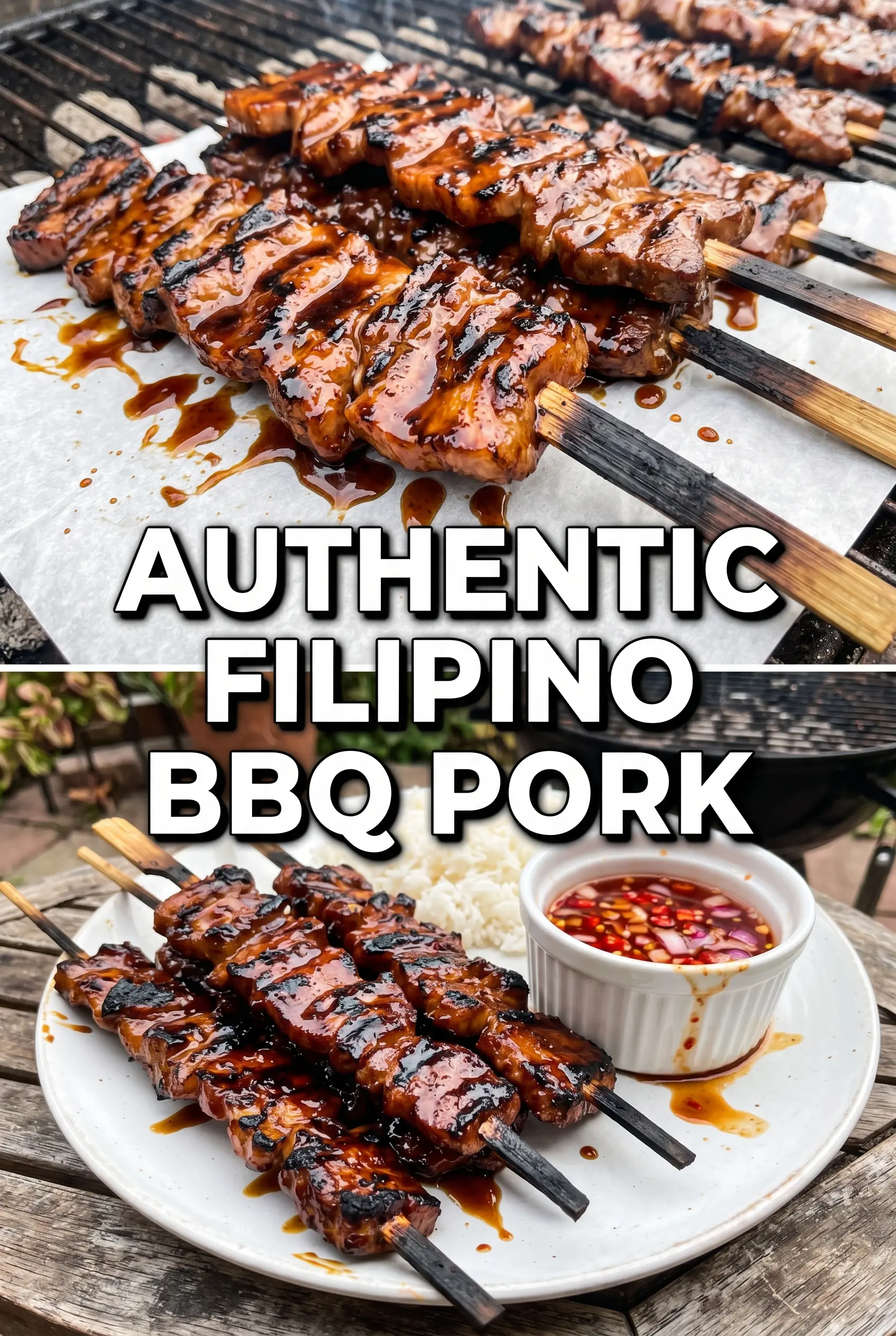
Filipino BBQ Pork Skewers with Banana Ketchup Glaze
Ingredients
Equipment
Method
- Combine banana ketchup, soy sauce, brown sugar, garlic, lemon juice (or calamansi juice), fish sauce, oil, and black pepper in a bowl until smooth and glossy.
- Visually check the marinade for an even color with no sugar clumps before using.
- Thread the pork shoulder slices onto the soaked wooden skewers and place them in a large dish.
- Pour the marinade over the pork, cover the dish, and refrigerate for at least 4 hours or overnight so the pork absorbs the flavor.
- Preheat the grill to medium-high heat and lightly arrange the skewers so they have space for even charring.
- Grill the skewers for 8-10 minutes per side, brushing with the marinade as they cook.
- Continue grilling until the pork is caramelized, cooked through, and you can see dark char marks plus a thick, glossy glaze coating the surface.
- Serve immediately with steamed rice and additional banana ketchup for dipping.
- Spoon the extra banana ketchup over each skewer to highlight the sweet-salty caramelized glaze.