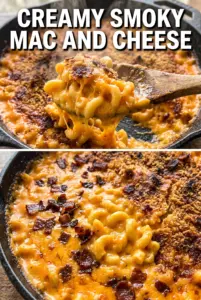
Smoked mac and cheese earns its spot on the table fast: the pasta stays saucy underneath, the top turns crisp and bronzed, and the smoke adds a savory edge that keeps every bite from tasting one-note. The best versions don’t just melt cheese over noodles. They build a sauce that holds together long enough to survive the smoker, then finish with a crust that cracks a little under the spoon.
The key here is balance. Sharp cheddar gives you that familiar mac and cheese punch, while smoked Gouda brings in the smoky depth without needing to overdo the wood. A little flour-thickened base keeps the sauce stable, and the panko topping gives you contrast against all that creaminess. If you’ve ever ended up with grainy cheese sauce or dry pasta after smoking, this method keeps both problems in check.
Below you’ll find the timing that matters most, the ingredient swaps worth knowing, and the one resting step that keeps the sauce from flooding the pan the second you serve it.
The cheese sauce stayed silky the whole time in the smoker, and the panko topping turned out crisp instead of soggy. I followed the rest time and it sliced onto plates perfectly.
Like this smoky, ultra-creamy mac and cheese? Save it to Pinterest for your next barbecue side dish or potluck.
The Smoker Heat That Keeps the Sauce Creamy Instead of Grainy
Mac and cheese can fall apart in the smoker if the sauce starts out too thin or the heat runs too high. At 225°F, you get enough time for the flavors to meld and the top to brown without pushing the dairy into separation. The sauce should be a little looser than you want in the final dish because the pasta keeps absorbing liquid while it smokes.
The other mistake is using cheese that melts poorly or adding it over hard heat. Shred your own cheddar and Gouda if you can, because pre-shredded cheese is coated with starch and doesn’t melt as smoothly. Pull the pan off the heat before stirring in the cheese so the sauce stays glossy instead of turning sandy.
What Each Cheese Is Actually Doing in the Pan
- Sharp cheddar — This gives the mac and cheese its backbone. It brings the tang and the classic cheddar bite, and it’s the cheese that keeps the dish from tasting flat. Mild cheddar will melt fine, but the flavor won’t hold up as well against the smoke.
- Smoked Gouda — This deepens the smoky character without needing a heavy hand with wood in the smoker. It melts beautifully and gives the sauce a rounder, silkier finish than cheddar alone.
- Heavy cream and milk — The combination keeps the sauce rich but still pourable. All cream makes the dish feel heavy; all milk can leave it thin. This balance gives you a sauce that clings to the pasta and still bakes up properly in the smoker.
- Panko breadcrumbs — Panko is what gives you that crisp top instead of a dense lid. Toss it with melted butter so it browns evenly. Plain breadcrumbs work in a pinch, but they won’t give the same light crunch.
Building the Sauce Before It Goes Into the Smoke
Starting the Roux
Melt the butter, whisk in the flour, and cook it long enough to lose the raw flour smell. The mixture should look smooth and a little foamy, not dark. If you rush this part, the sauce can taste pasty later, even after hours of smoking.
Whisking in the Dairy
Add the milk and cream gradually while whisking so the roux stays smooth. At first it will look thin, then it will thicken as it comes up to a gentle simmer. If you dump in all the liquid at once and stop whisking, you’ll get lumps that never fully disappear.
Melting in the Cheese
Take the pan off the heat before adding the cheddar and Gouda. Stir until the sauce turns glossy and uniform, then season it with garlic powder, salt, and pepper. If the sauce looks grainy, the heat was too high when the cheese went in.
Finishing in the Pan
Fold the cooked macaroni into the sauce and scrape it into an aluminum pan so the smoker can do its job evenly. The pasta should be coated generously, not swimming, because it will continue to soak up sauce as it cooks. Sprinkle the buttered panko over the top in an even layer so every scoop gets a bit of crunch.
Make it a little sharper
Swap part of the cheddar for extra-sharp cheddar if you want a stronger bite. The sauce will taste less mellow and a little more assertive, which helps if you’re serving it beside rich barbecue.
Dairy-free version that still coats the pasta
Use unsweetened oat milk, a dairy-free cream, and a good melting plant-based cheese. The sauce won’t have the same depth as the original, but the texture still works if you keep the heat low and smoke it just until bubbly.
Gluten-free adaptation
Use a gluten-free flour blend for the roux and gluten-free panko for the topping. The finished dish still gets the same creamy center and crisp top, though the topping may brown a little faster, so watch it near the end.
Add-ins that fit the smoker
Fold in cooked bacon, diced jalapeños, or pulled pork before smoking if you want the mac to play more like a full side dish. Add-ins should already be cooked, since the smoker here is for melting and browning, not for cooking raw proteins.
Storage and Reheating
- Refrigerator: Store covered for up to 4 days. The sauce will thicken as it chills, so expect a firmer texture after refrigeration.
- Freezer: It freezes, but the texture is never quite as silky after thawing. Freeze in portions, wrapped tightly, for up to 2 months.
- Reheating: Reheat covered in a 300°F oven with a splash of milk stirred in, or warm gently on the stovetop over low heat. High heat is what makes the cheese sauce break and turn oily.
Questions I Get Asked About This Recipe
Smoked Mac And Cheese
Ingredients
Equipment
Method
- Prepare smoker to 225°F, keeping the chamber steady at this temperature. Visual cue: look for consistent smoke output before you start building the pan.
- Melt butter over medium heat until it turns glossy. Visual cue: the butter should look smooth and lightly foamy.
- Add flour and whisk for 1-2 minutes, stirring until the mixture looks smooth and lightly golden. Visual cue: the roux should thicken slightly and lose the raw flour smell.
- Whisk in milk and cream gradually, keeping the mixture smooth. Cook for 3-5 minutes at a gentle simmer until it coats the back of a spoon.
- Add sharp cheddar and smoked Gouda, stirring until fully melted and the sauce becomes thick and glossy. Visual cue: you should see no cheese streaks remaining.
- Stir in garlic powder and salt and pepper to taste. Visual cue: seasonings should disappear evenly without clumps.
- Mix cooked elbow macaroni with the cheese sauce in an aluminum pan until every noodle is coated. Visual cue: the pasta should look uniformly creamy, not dry.
- Top with panko breadcrumbs mixed with melted butter and spread into an even layer. Visual cue: the surface should look sandy and lightly glossy.
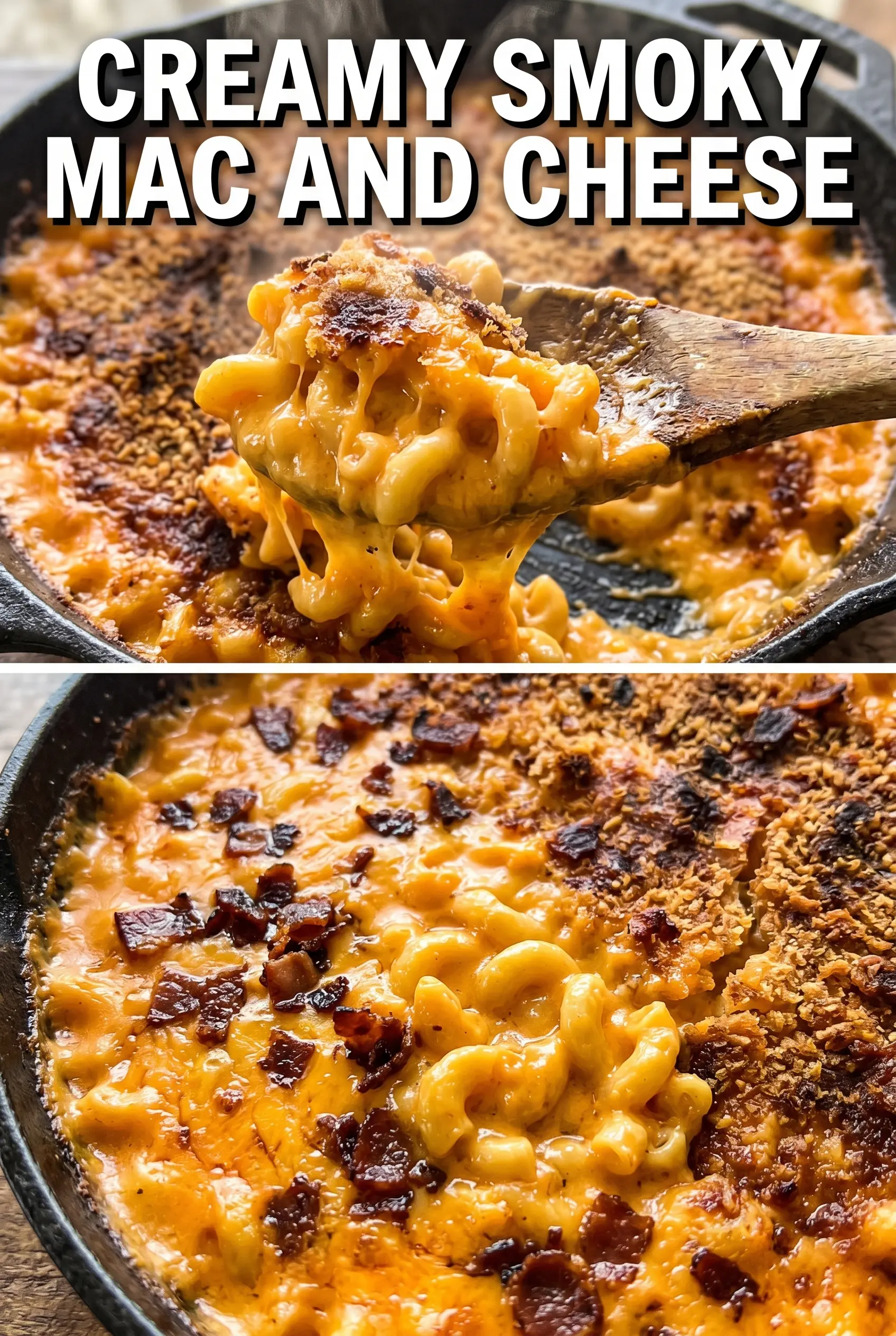
- Smoke for 60-90 minutes at 225°F until bubbly around the edges and the top turns golden. Visual cue: you should see visible bubbling and a browned crust.
- Let the smoked mac and cheese rest for 10 minutes before serving to help it set. Visual cue: bubbling subsides and the center looks slightly firmer.