Glossy teriyaki chicken skewers hit that sweet spot between sticky, charred, and juicy. The edges pick up a little caramelization from the grill while the center stays tender, and the sauce clings instead of sliding off the meat. When they’re done right, you get that first bite with a little smoke, a little sweetness, and enough savory depth to keep going back for another skewer.
The trick is giving the chicken a short marinade, then using the reserved sauce as a glaze only after it’s been cooked down with cornstarch. That keeps the finished skewers shiny and lacquered instead of watery. Chicken thighs also matter here; they stay tender over direct heat and hold up better than breast meat if the grill runs a little hot.
Below, I’ll walk through the part that keeps the sauce from burning, the ingredient swap that helps if you’re out of mirin, and the small timing detail that makes these skewers look like they came off a restaurant grill.
The glaze thickened up beautifully and stayed on the chicken instead of dripping off the grill. I also loved that the thighs stayed juicy even after the last brush of sauce.
Love these glossy teriyaki chicken skewers? Save them to Pinterest for a grilled dinner with sticky glaze and charred edges.
The Glaze Sticks Because You Reserve It First
Most teriyaki chicken gets messy when the same marinade that touched raw chicken is boiled down and brushed on at the end. Reserving part of the marinade before it meets the chicken solves that problem and gives you a clean glaze that can reduce without worry. That extra step also keeps the finished sauce brighter and less cloudy.
The other thing that matters is heat control on the grill. If the flame is too high, the sugar in the glaze burns before the chicken finishes cooking. Medium-high heat gives you browned edges, then the final brush of sauce turns glossy in the last couple minutes instead of turning bitter.
What Each Ingredient Is Doing in the Teriyaki Sauce
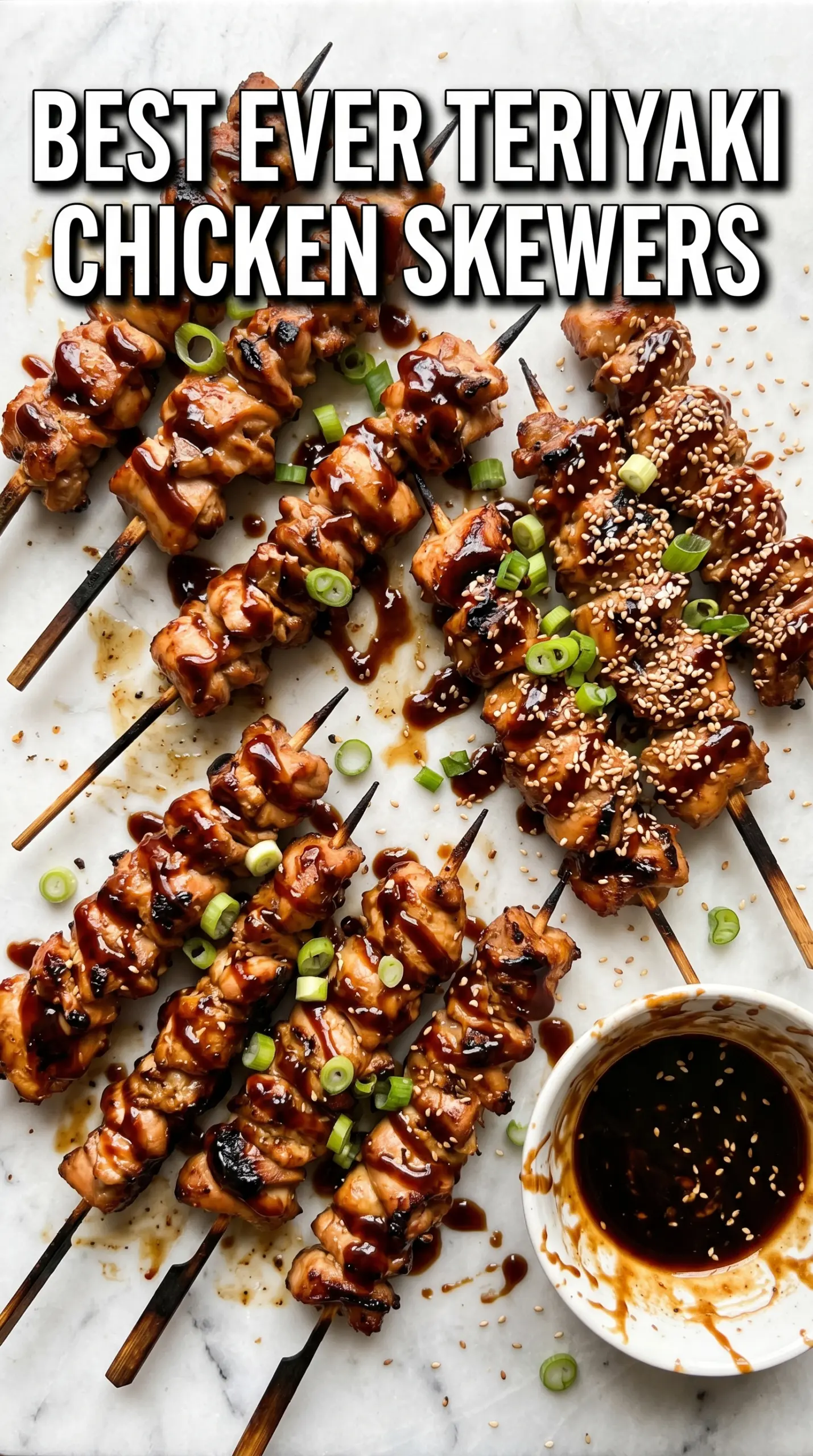
- Chicken thighs — Thighs stay juicy on the grill and handle the sugary glaze better than breast meat. If you use breast, cut the pieces a little larger and pull them as soon as they hit 165°F so they don’t dry out.
- Mirin — This adds sweetness and a soft, rounded depth that plain sugar can’t give on its own. If you don’t have it, use a mix of dry sherry or sake with a pinch more sugar, but the sauce will taste a little sharper.
- Soy sauce — This is the savory backbone. Use a standard soy sauce here; low-sodium works if that’s what you keep, but don’t use a very light version or the glaze can taste flat.
- Brown sugar — It helps the sauce caramelize and gives that sticky finish on the grill. White sugar works in a pinch, but you’ll lose some depth.
- Cornstarch slurry — This turns the reserved marinade into a brushable glaze. Add it to a simmering liquid, not a boiling one, and whisk until it goes from cloudy to glossy.
- Sesame oil, ginger, and garlic — These build the aroma that makes the sauce taste complete. Fresh ginger is worth using here; powdered ginger won’t give the same sharp, clean finish.
How to Grill the Chicken Without Burning the Sauce
Mix the Marinade and Separate It Early
Whisk the soy sauce, mirin, brown sugar, rice vinegar, garlic, ginger, and sesame oil until the sugar dissolves as much as it can. Before the chicken goes in, pull out one-third of that mixture and set it aside for glazing later. That reserved portion never touches raw meat, so it can be cooked down safely and brushed on without any hesitation.
Marinate Briefly, Not Overnight
Thirty minutes gives the chicken enough time to pick up flavor, and two hours is plenty if you want a deeper teriyaki taste. Longer isn’t better here because the vinegar and soy can start to cure the surface and tighten the texture. If you’re prepping ahead, cube the chicken and mix the marinade, then hold them separately until you’re ready to start marinating.
Thread the Skewers With Small Gaps
Use soaked wooden skewers and add 5 to 6 pieces of chicken per skewer, leaving just a little space between the cubes. Those tiny gaps help the heat move around the meat and give you better browning instead of steamed sides. Pack the pieces too tightly and the outside will glaze unevenly while the centers lag behind.
Finish With Sauce in the Last Two Minutes
Grill the skewers over medium-high heat, turning every 3 to 4 minutes until the chicken is cooked through and the edges are charred. While they cook, simmer the reserved marinade with the cornstarch slurry until it thickens enough to coat a spoon. Brush it on near the end so it turns sticky and glossy instead of scorching on the grates.
How to Adapt These Skewers for Different Pans, Diets, and Schedules
Oven-Broiled Teriyaki Skewers
If you don’t have a grill, broil the skewers on a foil-lined sheet pan about 6 inches from the heat, turning once. You won’t get the same smoky flavor, but the glaze will still caramelize and the chicken will stay juicy if you watch it closely.
Gluten-Free Version
Swap in tamari for the soy sauce and keep the rest of the recipe the same. The flavor stays balanced, and the glaze still reduces beautifully because the sugar and cornstarch are doing the heavy lifting.
Lower-Sugar Teriyaki
Cut the brown sugar back a little and let the glaze reduce a touch longer so it still coats the chicken. The result will taste less candy-sweet and a little more savory, which works well if you’re serving it with rice and vegetables.
Storage and Reheating
- Refrigerator: Store leftovers in an airtight container for up to 4 days. The glaze will thicken as it chills, which is normal.
- Freezer: These freeze well once cooked. Freeze the skewers off the sticks if that’s easier, then thaw overnight in the refrigerator before reheating.
- Reheating: Warm them covered in a 325°F oven until hot, or use a skillet with a splash of water to loosen the glaze. High heat dries out the chicken and can turn the sauce sticky in the wrong way.
Answers to the Questions Worth Asking

Best Ever Teriyaki Chicken Skewers
Ingredients
Equipment
Method
- Whisk together soy sauce, mirin, brown sugar, rice vinegar, garlic, ginger, and sesame oil in a bowl until the sugar dissolves and the mixture looks uniform.
- Reserve 1/3 of the marinade, then pour the remaining marinade over the chicken thigh cubes.
- Cover and marinate the chicken for 30 minutes to 2 hours, so the surface darkens slightly and becomes fragrant.
- Thread the marinated chicken onto soaked wooden skewers, using 5-6 pieces per skewer for even cooking.
- Grill the skewers over medium-high heat for 12-15 minutes, turning every 3-4 minutes until charred and cooked through with distinct grill marks.
- Simmer the reserved marinade with cornstarch and water until thickened to a glossy consistency.
- Brush the thickened glaze over the skewers in the last 2 minutes of grilling so it clings and caramelizes visibly.
- Garnish with sesame seeds and sliced green onions before serving, letting the bright garnish pop against the dark caramelized glaze.