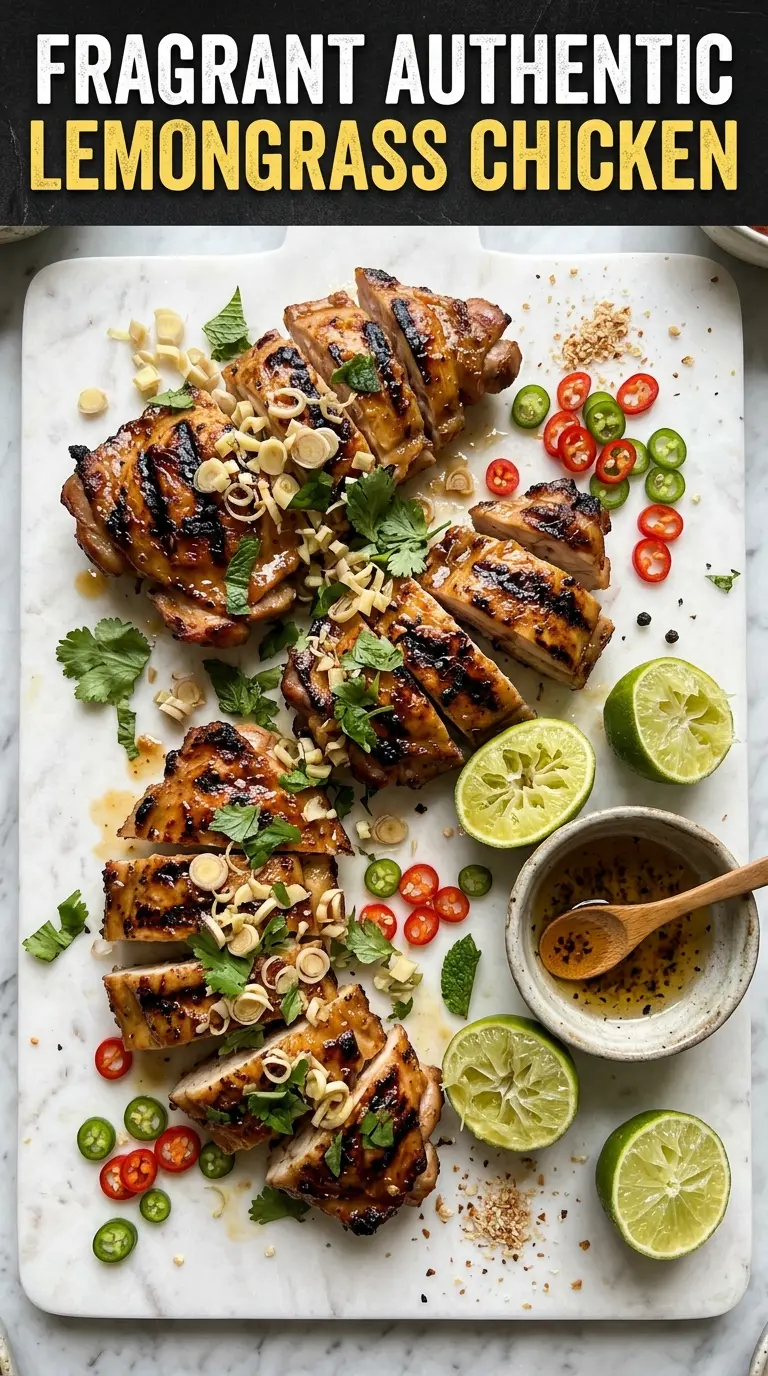
Caramelized edges, smoky grill marks, and that unmistakable lemongrass aroma make this grilled Vietnamese lemongrass chicken the kind of main dish people remember. The chicken turns deeply savory on the outside while staying juicy in the middle, and the marinade brings that balance of salty, sweet, and citrusy-woodsy flavor that makes a simple plate of rice feel complete.
What makes this version work is the way the marinade leans hard on fresh lemongrass, fish sauce, and brown sugar. Lemongrass needs to be minced finely enough to perfume the meat instead of sitting in stubborn little fibers, and the sugar helps the chicken pick up those dark, sticky charred spots on the grill. Thighs are the right cut here because they stay tender even if your grill runs a little hot or the chicken cooks a minute too long.
Below, I’ve included the small details that matter most: how to prep lemongrass so it actually disappears into the marinade, what to look for on the grill before you flip, and how to adjust the dish if you want to serve it with noodles, rice, or a lighter herb-heavy plate.
The lemongrass flavor came through beautifully, and the chicken got those caramelized edges without drying out. I marinated it overnight and it grilled up even better the next day.
Save this grilled Vietnamese lemongrass chicken for the nights when you want smoky char, fresh herbs, and a marinade that does the heavy lifting.
The Lemongrass Needs to Be Fine Enough to Disappear
Lemongrass is the ingredient that gives this chicken its signature scent, but it can also be the thing that makes the dish feel stringy if it’s chopped too coarsely. The tender inner stalk is what you want. Peel away the dry outer layers, trim the bottom and top, then mince the pale part as finely as you can so it blends into the marinade instead of clinging to the meat in chewy shards.
The second place people go wrong is with the sugar. It isn’t there just for sweetness; it helps the chicken brown fast over the heat and creates those sticky, almost lacquered bits at the edges. If your grill runs hot, that sugar can darken quickly, so keep the heat at medium-high instead of blasting it. You want char, not a bitter crust.
What the Marinade Is Doing to the Chicken
- Chicken thighs — Boneless thighs stay juicy and absorb the marinade better than breasts. Breasts can work, but they need a shorter grill time and they dry out faster, especially once the sugar in the marinade starts to caramelize.
- Lemongrass — Fresh lemongrass is worth using here. Dried lemongrass won’t give the same clean, grassy-citrus aroma, and paste only gets you partway there. If you can’t find fresh stalks, a frozen lemongrass paste is the closest backup.
- Fish sauce and soy sauce — Fish sauce brings the deep savory backbone that makes this taste Vietnamese, while soy sauce softens the edges and rounds out the salt. Don’t swap both for plain salt or the marinade will taste flat.
- Brown sugar — Brown sugar helps balance the salt and gives the chicken the sticky exterior that grills beautifully. Honey can work in a pinch, but it browns faster, so you’ll need to watch the chicken closely.
- Garlic and shallot — These build the aromatic base under the lemongrass. Mince them finely so they cling to the chicken instead of burning off in big bits on the grill.
Getting the Char Without Drying Out the Chicken
Building the Marinade
Stir the lemongrass, fish sauce, brown sugar, oil, garlic, shallot, soy sauce, and pepper together until the sugar starts dissolving and the mixture smells fragrant and salty-sweet. Coat the chicken thoroughly and turn each piece a few times so every surface gets covered. Four hours is enough for good flavor, but overnight gives you the deepest result. Don’t leave it on for days; the salt will start to change the texture in an unpleasant way.
Grilling Over Medium-High Heat
Preheat the grill before the chicken goes on. You want a hot grate so the outside starts to caramelize right away. Lay the thighs on and leave them alone until they release cleanly from the grill marks; if they stick, they’re not ready to turn yet. Grill for about 6 to 7 minutes per side, depending on thickness, until the edges are browned and the center is cooked through. If flare-ups happen, move the chicken to a cooler part of the grill instead of lowering the heat across the board.
Resting Before Slicing
Let the chicken rest for a few minutes before slicing. That short pause keeps the juices from spilling out onto the cutting board the second you cut in. Slice against the grain if you want the most tender bite, then serve it with rice, herbs, and lime wedges so the bright finish cuts through the smoky marinade.
How to Adapt This for Different Tables and Timetables
Chicken Breast Instead of Thighs
Chicken breast works if that’s what you have, but it needs gentler handling. Flatten it slightly for even cooking and pull it off the grill as soon as it reaches doneness, because breast meat dries out faster and doesn’t forgive overcooking the way thighs do.
Gluten-Free Version
Use a certified gluten-free soy sauce or tamari and check your fish sauce label. The flavor stays the same, but you avoid the wheat that can hide in some soy sauces.
No Grill, Still Good Char
A grill pan or cast-iron skillet can stand in for the outdoor grill. Use enough heat to get dark edges, but don’t crowd the pan or the chicken will steam before it browns. Work in batches if needed.
Make-Ahead Marinade for Busy Nights
Mix the marinade up to a day ahead and keep it chilled, then add the chicken when you’re ready. You can also marinate the chicken in the morning and grill it that night, which gives you plenty of flavor without rushing the prep.
Storage and Reheating
- Refrigerator: Store leftovers in an airtight container for up to 4 days. The flavor gets even deeper after a day, though the charred edges soften a bit.
- Freezer: Cooked chicken freezes well for up to 2 months. Slice it first and freeze it with a little of its juices so it doesn’t dry out on thawing.
- Reheating: Reheat gently in a covered skillet over low heat or in the microwave at short intervals. High heat makes the meat tough and can turn the sugary exterior bitter.
Answers to the Questions Worth Asking

Grilled Vietnamese Lemongrass Chicken
Ingredients
Equipment
Method
- In a bowl, combine the minced lemongrass, fish sauce, brown sugar, vegetable oil, minced garlic, minced shallot, soy sauce, and black pepper until the sugar dissolves and the mixture looks evenly coated.
- Add the boneless chicken thighs to the marinade, toss to coat, and refrigerate for 4-24 hours.
- Preheat the grill to medium-high heat and lightly oil the grates.
- Place the chicken on the grill and cook for 6-7 minutes per side until charred and cooked through.
- Let the chicken rest briefly, then slice and serve with rice, fresh herbs, and lime wedges.