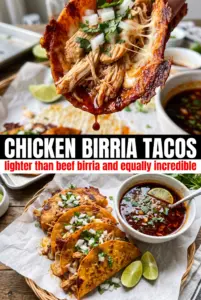
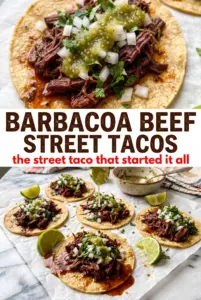
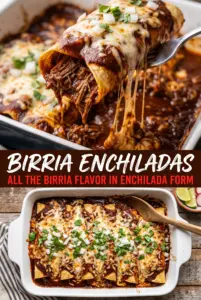
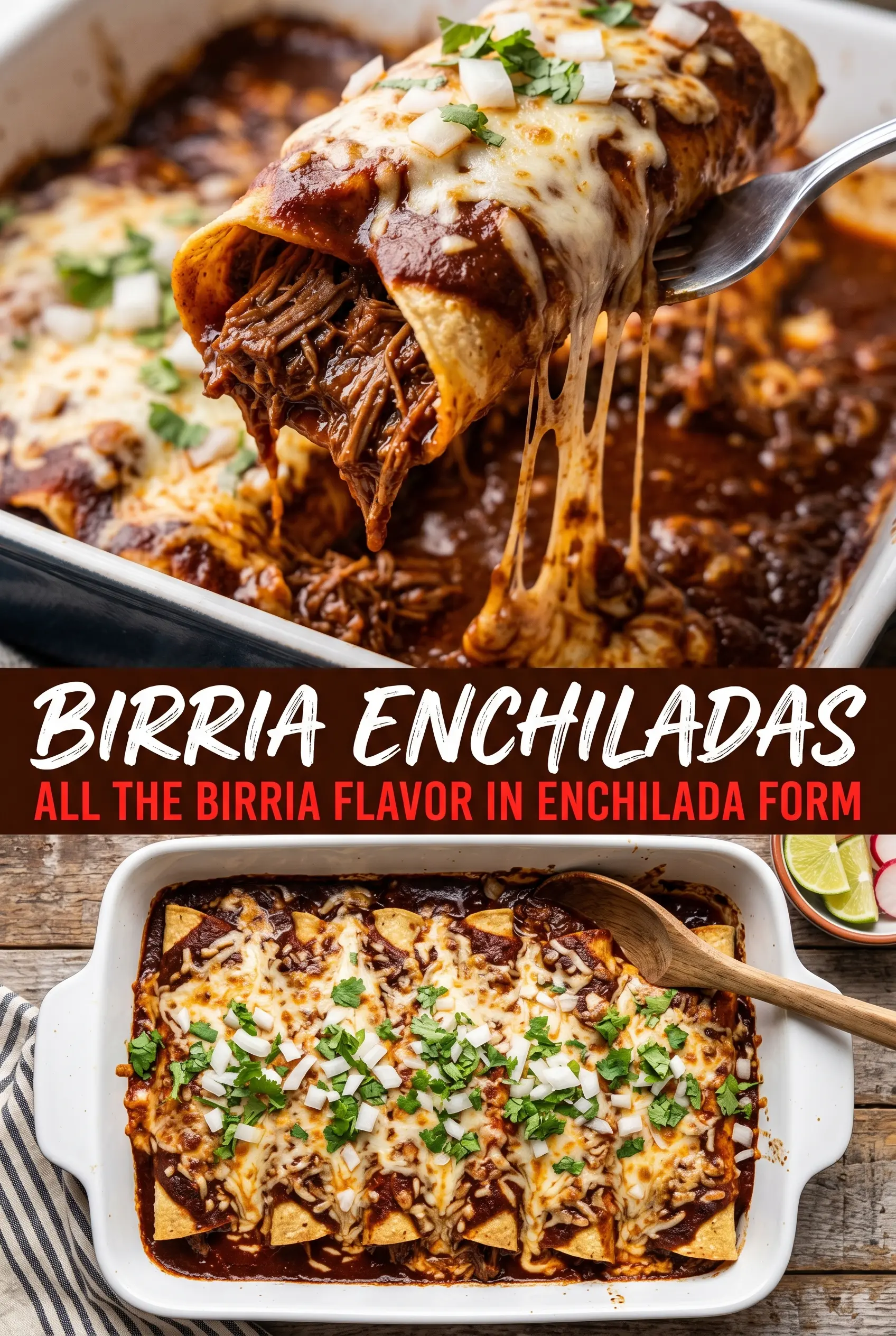
Tender birria beef tucked into saucy corn tortillas and baked under a blanket of melted cheese turns into the kind of pan dinner that disappears fast. The tortillas soften just enough to hold together, the red sauce sinks into every layer, and the top finishes with bubbling edges and a little crispy bite where the cheese meets the pan.
What makes these work is the way the sauce is built from the dried chiles and the birria consomé, not from a separate shortcut sauce. The guajillo and ancho bring color and depth, while the consomé gives the finished enchiladas that rich, meaty backbone you can taste in every forkful. Dipping the tortillas in oil first keeps them flexible and helps them hold up once they hit the sauce.
Below, you’ll find the part that matters most: how to keep the sauce smooth, how to keep the tortillas from tearing, and the small adjustment that makes these taste like they came from a very good kitchen instead of an average casserole dish.
The red sauce was silky after straining, and the tortillas stayed together instead of turning soggy. I used all the onion and cilantro on top, and the beef flavor came through in every bite.
Save these birria enchiladas for the night you want shredded beef, red chile sauce, and melted cheese in one baked dish.
The Reason the Tortillas Stay Intact Instead of Turning to Mush
The biggest mistake with birria enchiladas is flooding dry tortillas with sauce and hoping the oven will sort it out. It won’t. Corn tortillas need a little fat before they see the sauce, or they absorb liquid too fast and collapse before they ever make it to the table.
Dipping each tortilla in oil first creates a thin barrier that keeps the sauce from soaking straight through. Then a quick dip in the red sauce gives you color and flavor without overloading the tortilla. That balance is what keeps the enchiladas soft but still rollable, with edges that hold together after baking.
- Oil dip — This is what keeps the tortillas pliable. A light coating is enough; if they’re greasy, the finished dish will taste heavy instead of rich.
- Strained sauce — Straining matters here because dried chile skins can leave the filling gritty. If your blender leaves a few flecks behind, the mesh sieve catches them and gives you a smoother finish.
- Consomé — This is not just extra liquid. It carries the beef flavor into the baking dish, so the enchiladas taste like birria from the inside out.
What Each Part of the Pan Is Doing
The guajillo peppers bring the brick-red color and a clean chile flavor. The ancho peppers add a deeper, slightly sweet note that keeps the sauce from tasting sharp. Together, they give you a sauce that tastes layered, not just spicy.
Oaxaca cheese is the right cheese here because it melts into long, stretchy strands without turning oily. If you can’t find it, mozzarella is the closest practical swap, but it will taste milder and less tangy. The shredded birria beef should be moist before it goes in; if it’s dry in the pan, a spoonful of consomé tossed with it helps every bite stay juicy.
- Guajillo peppers — Best for color and a mild, fruity heat. They’re the backbone of the sauce, so don’t skip them unless you’re replacing the whole chile mix.
- Ancho peppers — These add body and a darker, rounder flavor. If you need a substitute, use dried pasilla or a little extra guajillo, but expect a slightly less complex sauce.
- Oaxaca cheese — Use the real thing if you can. It melts into the best texture for enchiladas, while pre-shredded cheese tends to melt less smoothly because of the anti-caking coating.
- Birria beef and consomé — The beef gives you the filling, and the consomé gives you the finishing flavor. That broth is what makes the dish taste like birria instead of just beef enchiladas in red sauce.
Building the Enchiladas So the Filling Stays Juicy
Toast and soak the chiles
Toast the dried peppers in a dry skillet just until they smell fragrant and darken slightly, about 2 minutes. If they go too far, they turn bitter, and that bitterness carries straight into the sauce. Move them to hot water and let them soften for 10 minutes until they’re pliable enough to blend without fighting the blender blades.
Blend a smooth chile base
Blend the rehydrated peppers with garlic, cumin, oregano, cloves, and some of the soaking liquid until the mixture looks smooth and loose, not thick and paste-like. If the blender sounds strained, add a little more liquid. Strain it through a fine mesh sieve so the sauce bakes into the enchiladas instead of leaving little chile bits behind.
Build the pan in layers
Spread a thin layer of sauce on the bottom of the baking dish first. That keeps the tortillas from sticking and starts the flavor from underneath. Dip each tortilla in oil, then quickly in sauce, fill it with beef and cheese, and roll it seam-side down so it stays closed while baking.
Bake until bubbling at the edges
Pour the remaining sauce mixed with birria consomé over the top, then finish with the rest of the cheese. Bake at 375°F until the cheese melts fully and the sauce bubbles around the edges, about 20 minutes. If the top looks done but the center is still cool, the dish hasn’t heated through yet; give it a few more minutes so the filling comes out hot and cohesive.
How to Adapt These Birria Enchiladas for Different Kitchens
Make Them Spicier Without Changing the Texture
Add one or two dried chile de árbol peppers to the blender with the guajillo and ancho. That keeps the sauce balanced but adds a sharper heat that shows up after the first bite. If you want more burn, use the chile de árbol sparingly, because too much can overpower the beef.
Dairy-Free Version That Still Feels Rich
Swap the Oaxaca cheese for a good melting dairy-free cheese and use a little extra consomé in the filling to keep it from tasting dry. The texture won’t be as stretchy, but the chiles and beef still carry the dish. Watch the top closely in the oven because some plant-based cheeses brown faster than dairy cheese.
Corn Tortilla Swap That Works in a Pinch
If your corn tortillas crack even after the oil dip, warm them briefly in a skillet or microwave before saucing. That extra heat softens the starches and makes them easier to roll. Flour tortillas will work, but they change the dish into something softer and less traditional, with a doughier bite.
Storage and Reheating
- Refrigerator: Keep leftovers covered for up to 4 days. The tortillas soften more as they sit, but the flavor gets deeper.
- Freezer: These freeze well in a tightly wrapped baking dish or airtight container for up to 2 months. Freeze before adding the fresh onion and cilantro garnish.
- Reheating: Reheat covered in a 350°F oven until hot in the center, or use the microwave in short bursts if you’re in a hurry. The biggest mistake is blasting them uncovered, which dries out the beef and tightens the cheese into a rubbery layer.
Questions I Get Asked About This Recipe
Birria Enchiladas
Ingredients
Equipment
Method
- Toast the guajillo peppers and ancho peppers in a dry skillet for 2 minutes, stirring until fragrant. Then soak them in hot water for 10 minutes to rehydrate.
- Blend the rehydrated peppers with garlic, cumin, oregano, cloves, and 1 cup of the soaking liquid until smooth. Strain through a fine mesh for a silky sauce.
- Taste the strained sauce and add salt to taste. Keep the sauce warm while you assemble the tortillas.
- Spread a thin layer of the red sauce on the bottom of a 9x13 baking dish so the enchiladas don’t stick. Use enough to coat the surface evenly.
- Dip each corn tortilla in oil, then quickly in the red sauce. The tortilla should look glossy and coated, not soggy.
- Fill each tortilla with shredded birria beef and 2 tablespoons of oaxaca cheese. Roll and place seam-side down in the dish for even baking.
- Combine the remaining red sauce with birria consomé, then pour over the enchiladas to surround them. Top with the remaining oaxaca cheese so it melts into a browned layer.
- Bake at 375°F for 20 minutes until bubbly around the edges and fully heated through. Garnish with diced onion and cilantro before serving.