Tightly wrapped and stuffed to the edges, these chipotle beef burritos hit that sweet spot between weeknight practical and genuinely satisfying. The beef stays savory and smoky, the beans and rice bulk it out without turning mushy, and the flour tortilla takes on just enough warmth to fold cleanly around everything. When you slice one open, you get layers instead of a pile — that’s what makes a burrito worth making at home.
The trick is building the filling in one skillet and letting the chipotle and adobo cook for a few minutes with the beef before the beans and rice go in. That short simmer takes the edge off the peppers and spreads the heat through the whole mixture instead of leaving you with random hot spots. I also like using shredded cheese inside the burrito, not just on the side, because it melts into the warm filling and helps everything hold together once you roll it.
Below, I’ve included the small details that keep the tortillas from splitting, the filling from leaking, and the burritos from feeling heavy instead of hearty. A good burrito is mostly about balance, and once you know where to stop with the filling, the rest goes fast.
The chipotle flavor came through without overpowering everything, and the filling held together so well that the burritos didn’t fall apart when I rolled them. My husband kept saying the rice and beans made it feel like takeout in the best way.
Save these chipotle beef burritos for the nights when you want smoky filling, melty cheese, and a wrap that actually stays closed.
The Difference Between a Burrito That Holds Together and One That Bursts
The filling has to be hot, but not loose. If you stuff a burrito with beef mixture that’s still wet from the skillet, the tortilla softens too fast and tears when you try to roll it. Let the beef mixture simmer long enough for the adobo to cling to the meat and for the beans and rice to absorb excess moisture. You want a filling that mounds in the spoon instead of sliding off it.
Warm tortillas matter more than most people think. A cold flour tortilla cracks along the seam, especially once you fold in cheese and sauce. A few seconds in a dry skillet makes it flexible and gives it the stretch you need to tuck the sides without ripping the surface.
- Ground beef or diced steak — Ground beef gives you the fastest, most forgiving filling. If you use diced steak, cook it just until browned and tender, then keep the simmer brief so it doesn’t dry out.
- Chipotle peppers in adobo — This is where the smoky heat comes from. Mince the peppers finely so you don’t get concentrated pockets of spice, and use the adobo sauce to spread that flavor through the whole pan.
- Black beans and rice — These bulk up the burritos and make the filling feel complete. Use cooked, well-drained beans and plain rice; anything too wet turns the burrito soggy from the inside.
- Monterey Jack cheese — It melts smoothly and gives you that stretchy, cohesive bite. A mild cheddar can work, but it won’t melt as cleanly and can taste sharper against the chipotle.
- Flour tortillas — Use the biggest ones you can find. Burritos need room to fold, and smaller tortillas force overstuffing, which is how seams split.
Building the Burrito Filling So the Smoke Stays Balanced
Softening the Onion First
Start with the onion in hot olive oil and let it go until it turns translucent and starts to smell sweet. That takes the raw edge off and gives the beef a better base to cook into. If the onion is still crunchy at the end, the burrito filling tastes flat and a little harsh. Garlic goes in after the onion has softened so it doesn’t burn in the hot pan.
Browning the Beef Before the Chipotle Goes In
Add the beef and let it brown properly before stirring in the chipotle and adobo. Browning builds the savory flavor that keeps the burrito from tasting one-note. If you dump the peppers in too early, the moisture can keep the meat from searing, and you lose that deep cooked flavor. Break the beef apart as it cooks, but leave it alone for a minute or two at a time so it can pick up color.
Letting the Chipotle Simmer Into the Pan
Once the peppers, adobo, and cumin are in, give the mixture a few minutes over medium heat. You’re not reducing a sauce here; you’re letting the seasoning settle into the beef and lose that sharp canned edge. The filling should look glossy and smell smoky, not raw or acidic. Stir in the beans and rice after that so they soak up the seasoned fat without getting smashed.
Rolling Without Squeezing the Filling Out
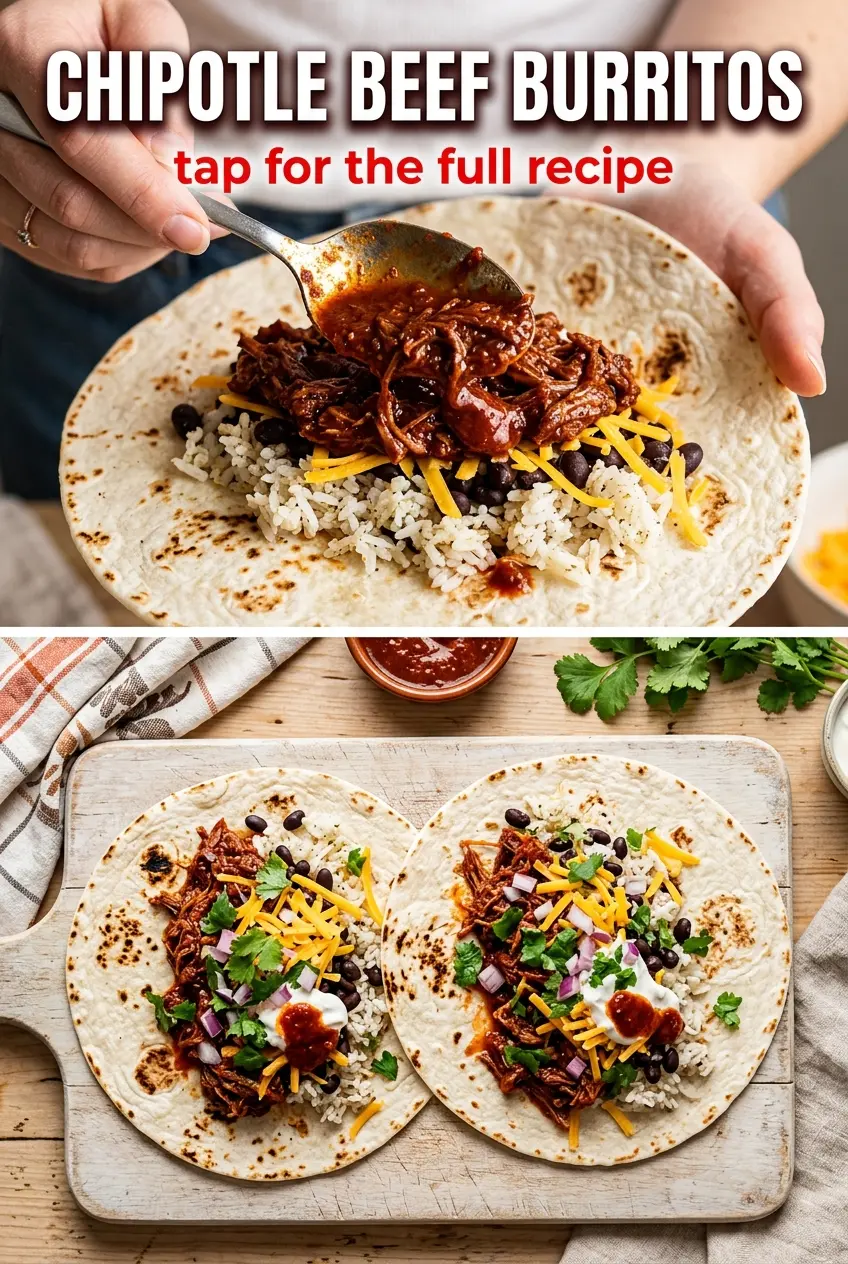
Warm the tortillas one at a time and build each burrito with the filling slightly off center. Add the cheese before rolling so it melts into the hot filling and acts like glue. Fold the sides in first, then roll away from you with steady pressure. If the tortilla starts to tear, you’ve overfilled it; use a little less next time and the wrap will close cleanly.
How to Adapt These Chipotle Beef Burritos for Different Nights
Ground Beef for Faster Prep
Use ground beef when you want a quicker filling with less knife work. It soaks up the chipotle and adobo nicely and gives you a soft, cohesive texture that rolls easily. If you use a fattier grind, drain off excess grease before adding the beans and rice so the burritos don’t turn oily.
Steak Burritos with More Bite
Diced steak gives you a firmer, meatier burrito. Cut it small so it folds well, then brown it quickly and keep the simmer short so it stays tender. This version tastes a little more substantial and a little less saucy, which works well if you like distinct pieces of beef instead of a minced filling.
Gluten-Free Burrito Bowl Version
Skip the tortillas and serve the beef, beans, rice, cheese, salsa roja, and toppings in bowls. You keep all the smoky chipotle flavor and lose the wrap, which makes this an easy gluten-free option. The texture is a little less handheld, but it’s still the same filling and works especially well for meal prep.
Make-Ahead Lunch Burritos
Assemble the burritos, wrap them tightly in foil, and chill them before reheating. The filling firms up a little as it cools, which makes the wraps easier to handle and less likely to unravel. If you’re packing them for later, hold back the sour cream until serving so the tortilla doesn’t get soft.
Storage and Reheating
- Refrigerator: Store the filling for up to 4 days. Keep the tortillas separate if you want the best texture.
- Freezer: The filling freezes well for up to 2 months. Burritos can be frozen after wrapping in foil, but the tortilla softens a bit when thawed.
- Reheating: Warm the filling in a skillet over medium-low heat or in the microwave with a splash of water if it looks dry. For wrapped burritos, reheat covered in foil in a 350°F oven until hot through; microwaving straight from cold often makes the tortilla rubbery before the center heats.
Answers to the Questions Worth Asking
Chipotle Beef Burritos
Ingredients
Equipment
Method
- Heat the olive oil in a large skillet over medium-high heat. Add the diced onion and cook until softened, about 3 minutes, stirring occasionally so the onion turns translucent.
- Add the minced garlic and cook for 1 minute more. Keep stirring until fragrant, about 1 minute, without letting it brown.
- Add the ground beef and cook until browned, breaking apart as it cooks. Continue until no pink remains and the beef develops browned bits, about 5–7 minutes total.
- Stir in the minced chipotle peppers in adobo, adobo sauce, and cumin. Mix thoroughly so everything is coated and looks evenly speckled.
- Simmer the mixture for 5 minutes to blend flavors. You should see gentle bubbling and a darker, cohesive sauce clinging to the beef.
- Add the cooked black beans and cooked rice, stirring to combine. Cook until heated through and the mixture looks evenly distributed, about 3–5 minutes.
- Season with salt and pepper to taste. Taste and adjust so the filling is balanced and not flat.
- Warm the tortillas in a dry skillet. Heat until flexible and lightly toasted, about 30–60 seconds per side, using a visual cue of browning spots.
- Fill each tortilla with about 1 cup of the beef mixture. Spoon the filling in a line across the center so it stays bunched for a tight roll.
- Top each burrito with shredded Monterey Jack cheese. Add enough so the cheese layer can melt, then keep the filling from overflowing.
- Roll tightly, tucking in the sides. Press lightly as you roll so the seam holds and the burrito looks compact.
- Serve with additional salsa roja, sour cream, jalapeños, and cilantro. Plate so the sauce can pool slightly, showing a drip-ready finish.