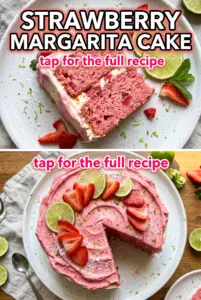
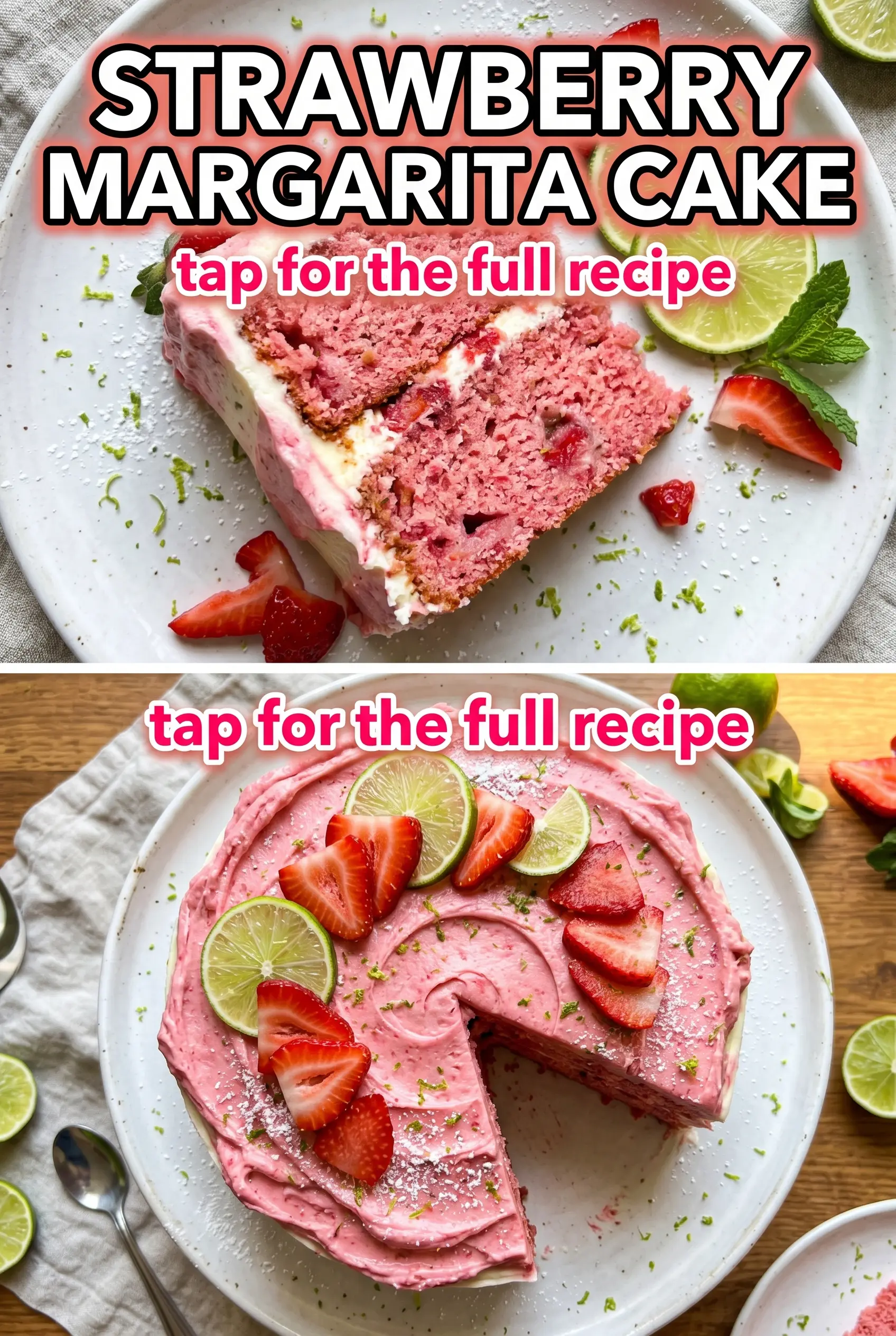
Strawberry Margarita Cake lands right in that sweet spot between bright and rich: tender pink layers, fresh strawberry flavor, and a lime frosting that cuts through the sweetness so every bite stays lively. The crumb stays soft because the batter uses a simple butter cake base, but the strawberry puree and lime juice keep it from tasting flat or overly sugary. It slices cleanly, stacks neatly, and looks like you spent far more time on it than you did.
The key is balancing moisture with structure. Fresh strawberry puree adds flavor and color, but it needs to be folded into a batter that already has enough fat and flour to support the extra liquid. The lime juice goes into both the cake and the frosting, so you get that margarita-like snap without making the cake taste sour or the frosting runny. Room-temperature butter and cream cheese matter here too; cold dairy will leave the frosting lumpy, and overbeating it later won’t fix the texture.
Below, I’ve included the one mixing order that keeps the layers tender, plus the substitution that works if your strawberries are a little pale or out of season. If you’ve had fruit cakes turn dense or frosting slide off the sides, the notes here will help.
The layers baked up even and the lime frosting was thick enough to hold the strawberry slices without sliding. I used fresh berries and the cake stayed moist for two days without getting gummy.
Save this Strawberry Margarita Cake for the days when you want a soft berry layer cake with a bright lime frosting and a clean, bakery-style slice.
The Trick to Keeping Strawberry Cake from Turning Dense
Fruit cakes get heavy when the batter loses its structure before it hits the oven. The most common mistake is dumping all the wet ingredients in at once, which can make the batter look curdled and the final crumb tight. Alternating the flour mixture with the strawberry-lime mixture and milk keeps the batter emulsified and gives the cake a lighter rise.
Another place this recipe can go wrong is the strawberry puree. If it’s watery, it weakens the batter and blunts the flavor. Use puree that still has body, like something you’d spoon rather than drink, and stop mixing as soon as the flour disappears. Overmixing after the flour goes in turns a tender cake into a tough one.
What Each Ingredient Is Actually Doing in This Cake
- Fresh strawberry puree — This brings the berry flavor and the pink color. Fresh is best because frozen berries can add extra water; if frozen is all you have, cook them down briefly and cool them before measuring so the batter doesn’t get loose.
- Lime juice and zest — The juice sharpens the sweetness and gives the cake its margarita-like edge, while the zest carries the strongest lime aroma. Bottled juice works in a pinch, but fresh zest is the part you don’t want to skip.
- Cream cheese and butter — This frosting needs both. Cream cheese gives tang and body, while butter keeps it smooth enough to spread. If the frosting feels too soft, chill it for 10 to 15 minutes before assembling the cake.
- All-purpose flour — It gives the cake enough structure to hold the fruit puree without sinking. Cake flour would make it softer, but it can get a little fragile for layering unless you handle it gently.
- Milk — Whole milk adds richness and helps the batter loosen just enough to spread evenly in the pans. Lower-fat milk works, but the cake loses a little of that plush, bakery-style crumb.
Building the Batter and Frosting the Layers Without a Mess
Whisk the Dry Ingredients First
Start by combining the flour, baking powder, and salt so the leavening distributes evenly. If the baking powder clumps, you’ll get uneven lift and a few odd tunnels in the crumb. This step seems basic, but it’s what keeps the layers even instead of domed and patchy.
Cream the Butter and Sugar Until It Turns Pale
Beat the butter and sugar until the mixture looks lighter in color and a little fluffy around the edges. That’s the air you’re building into the cake before the flour ever shows up. If you rush this and stop while the mixture still looks gritty, the cake will bake up denser and less tender.
Add the Strawberry-Lime Mixture in Alternating Turns
Mix the strawberry puree with the lime juice, then add it to the bowl in turns with the flour mixture and milk. End with flour so the batter finishes slightly thicker and doesn’t break. As soon as the last streaks of flour disappear, stop mixing. That’s the point where overworking starts to matter.
Cool Completely Before You Frost
Let the cakes rest in the pans for 15 minutes, then turn them onto racks and wait until they’re fully cool. A warm cake melts cream cheese frosting fast, which sends the filling sliding out the sides. If you want neat layers, wait until the pans and cake bottoms feel cool to the touch before you start stacking.
Spread the Filling, Then Lock in the Crumb
Place the first layer on your plate and spread the frosting evenly, then add the strawberry slices before stacking the second layer. The fruit adds a fresh bite, but don’t pile it on too thick or the layers will slip. Frost the top and sides with smooth, steady strokes, then chill the cake briefly if the frosting starts to soften as you work.
Three Ways to Make This Cake Work for Your Kitchen
Dairy-Free Version
Use a plant-based butter and a dairy-free cream cheese that’s meant for frosting. The cake itself will still bake well, but the frosting may be softer, so chill it before assembling and expect a slightly less tangy finish.
Stronger Lime Bite
If you want the cake to lean more margarita than berry, add an extra teaspoon of lime zest to the frosting and a small pinch of salt. That sharpens the citrus without thinning the texture the way extra juice can.
Cupcake Adaptation
This batter bakes nicely as cupcakes, but fill the liners only two-thirds full and start checking them a few minutes early. You’ll get a lighter, more portable version with the same strawberry-lime balance and easier frosting control.
Make-Ahead Storage
Bake the layers a day ahead and wrap them tightly once cool. The frosting also holds well overnight in the fridge; bring it back to spreadable texture and stir it before assembling so it smooths out again.
Answers to the Questions Worth Asking
Strawberry Margarita Cake
Ingredients
Equipment
Method
- Preheat the oven to 350°F and grease two 8-inch round cake pans.
- Whisk together all-purpose flour, baking powder, and salt in a bowl until evenly combined.
- Beat butter and granulated sugar until fluffy.
- Add eggs one at a time, beating well after each addition.
- Combine fresh strawberry puree and 1/4 cup lime juice until smooth.
- Alternate adding the flour mixture and the strawberry-lime mixture with whole milk, beginning and ending with the flour mixture; mix just until incorporated.
- Stir in vanilla extract.
- Divide the batter between the two pans and bake at 350°F for 28-30 minutes.
- Cool in the pans for 15 minutes, then turn out onto racks to cool completely.
- Beat cream cheese and butter until smooth.
- Add powdered sugar, 2 tbsp lime juice, and lime zest, then beat until creamy and spreadable.
- Place one cake layer on a plate and spread frosting on top.
- Add sliced fresh strawberries over the frosting.
- Place the second cake layer on top and frost the top and sides.
- Garnish with fresh strawberries and mint.
- Rest the assembled cake for 1 hour before slicing for cleaner layers.