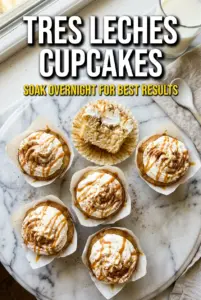
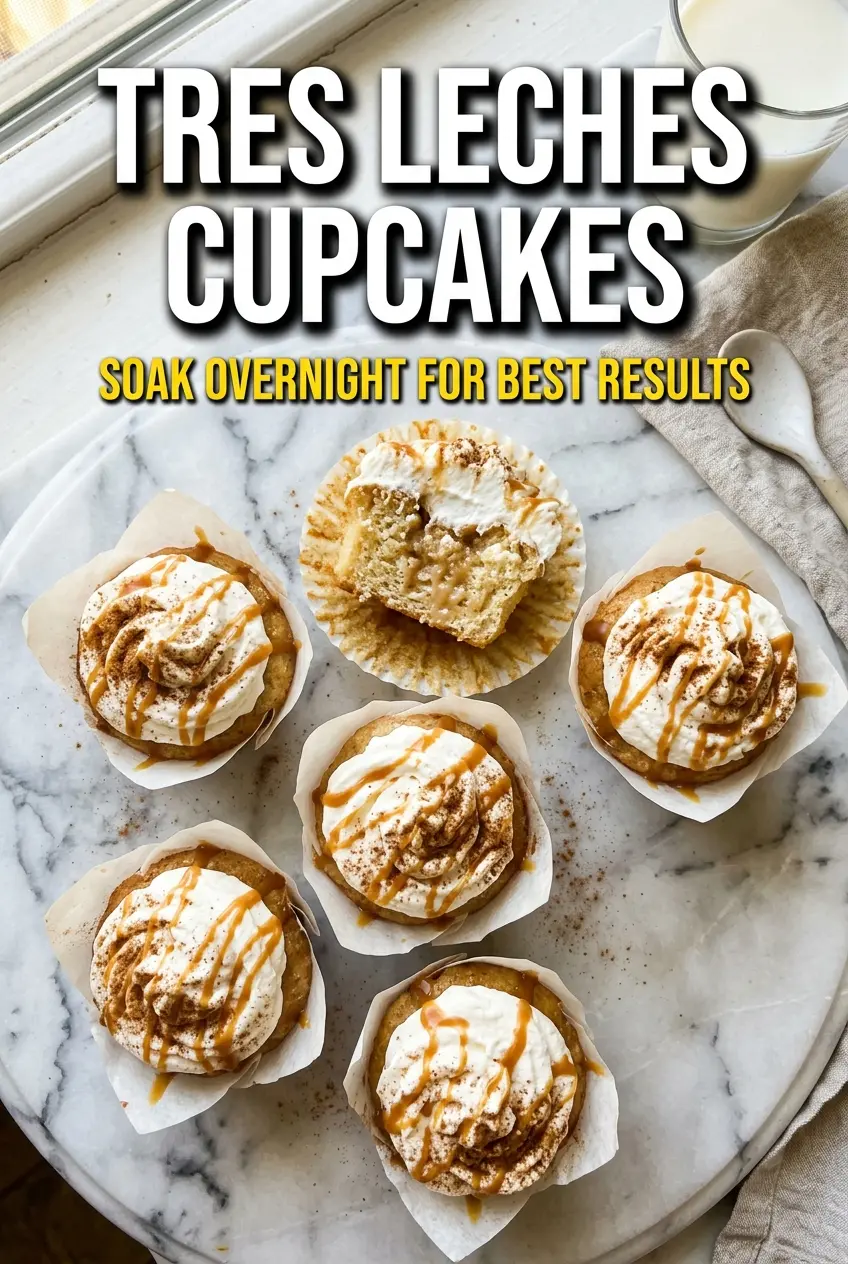
These tres leches cupcakes stay unbelievably soft, but they still hold together like a proper cupcake instead of collapsing into pudding. Each one soaks up the three-milk mixture, then gets capped with a cloud of whipped cream that keeps the whole dessert light, cool, and cleanly sliceable. The best part is that the crumb tastes even better after it rests, when the milk has settled all the way through every bite.
The texture comes down to two small things done right: beating the egg whites to stiff peaks and pouring the milk over cupcakes while they’re still warm. The whipped egg whites give the batter lift without making it dry, and the warm crumb drinks in the milk mixture instead of letting it pool on top. That’s the difference between a cupcake that tastes soaked and one that just looks wet.
Below, I’m walking through the part that matters most: how to keep the cupcakes airy, how to tell when they’ve taken on enough milk, and how to top them so they still look neat when you serve them.
The cupcakes soaked up the milk mixture perfectly and still held their shape after chilling overnight. The whipped cream stayed fluffy, and the strawberry on top made them taste like a bakery dessert.
Save these tres leches cupcakes for a make-ahead dessert with ultra-soft crumb and whipped cream topping.
The Trick That Keeps These Cupcakes From Turning Soggy
The biggest mistake with tres leches cupcakes is treating them like ordinary cupcakes and letting the milk soak happen too slowly. If the cupcakes cool off completely first, the tops can resist the liquid and the milk collects in the liner instead of moving through the crumb. Pouring the milk mixture over warm cupcakes gives you an even soak without breaking the structure.
The other thing that matters is the egg white foam. Those stiff peaks are doing more than adding lift; they’re what keep the batter airy enough to absorb the milk later. If the whites are only soft or medium peaks, the cupcakes bake up a little dense and won’t drink in the milk as cleanly.
- Warm cupcakes absorb better — prick them right out of the oven and add the milk while steam is still escaping.
- Stiff egg whites matter — they give the crumb enough loft to stay tender after soaking.
- Don’t overbake — dry cupcakes can’t take up the milk mixture evenly, and the texture turns a little chalky instead of creamy.
What Each Ingredient Is Actually Doing in This Dessert
All-purpose flour gives the cupcakes enough structure to survive the soak without becoming heavy. Cake flour can work in a pinch if that’s what you have, but it makes a finer, softer crumb that can get fragile once the milk goes in.
- Eggs, separated — the yolks build richness and the whites create the lift. Don’t rush the folding step after whipping the whites; that’s where the light texture comes from.
- Sweetened condensed milk — this is the sweetness and body of the soak. There isn’t a true substitute if you want the classic flavor, though a homemade condensed-milk-style mixture will still work in a pinch.
- Evaporated milk — it adds milky depth without extra sweetness. Whole milk won’t give the same concentrated taste.
- Heavy cream — used twice here, once in the soak and once on top. In the milk mixture, it softens the sweetness; in the topping, it whips into stable peaks with the powdered sugar.
- Vanilla — it ties the whole dessert together and keeps the milk mixture from tasting flat. Use pure vanilla if you can, especially in the whipped cream.
- Fresh strawberries — they add a bright, clean finish that cuts through the richness. Slice them right before serving so they stay glossy and fresh.
Building the Batter and Soaking It at the Right Moment
Whisking the dry base
Start by whisking the flour, baking powder, and salt so the leavening is spread evenly through the batter. That keeps the cupcakes from baking with random tunnels or dense pockets. If the dry ingredients aren’t fully combined, the batter can fold unevenly and the texture gets patchy after baking.
Richer yolks, lighter whites
Beat the egg yolks and sugar until the mixture looks pale and a little thick, almost like loose ribbon. Add the milk and vanilla, then fold in the flour mixture just until the batter comes together. In a separate bowl, beat the egg whites until stiff peaks stand straight up; if they look dry and clumpy, you’ve gone too far, and they won’t fold in cleanly.
Folding without deflating
Fold the whites into the batter in two or three additions using a wide spatula and a light hand. You want to see the last streaks disappear, but not at the cost of knocking out all the air you just made. If the batter turns completely smooth and heavy, it was overmixed and the cupcakes will bake up flatter.
Soaking while they’re still warm
Bake until the tops are lightly golden and spring back when touched. The second they come out, pierce each cupcake several times with a toothpick and spoon or pour the milk mixture over them evenly. Don’t dump it all in one spot; the liquid needs to seep through the entire cupcake so every bite tastes the same.
How to Adapt These Cupcakes for Different Needs
Dairy-Free Version
Use canned coconut milk in place of the soaking mixture’s cream and evaporated milk, then top with coconut whipped cream. The result is still rich and soaked, but the flavor shifts toward coconut and away from the classic dairy-forward taste. It’s the best route if you need a dairy-free dessert that still feels special.
Gluten-Free Swap
A good 1:1 gluten-free flour blend can work here, but the cupcakes will be a touch more delicate after soaking. Let them cool in the pan for a few minutes before moving them, and don’t skip the chilling time. The extra rest helps the crumb set so they don’t fall apart when you add the topping.
Chocolate Tres Leches Cupcakes
Replace part of the flour with unsweetened cocoa powder and keep the milk soak exactly the same. The chocolate gives the dessert a deeper, less traditional taste, but the soaking method still works because the crumb stays open and tender. Strawberries on top are especially good here because they cut through the cocoa.
Storage and Reheating
- Refrigerator: Store the soaked cupcakes covered for up to 3 days. They stay moist, but the whipped topping is best within the first 24 hours.
- Freezer: Freeze the unfrosted, unsoaked cupcakes if you want to work ahead. The soaked finished cupcakes don’t freeze well because the dairy mixture changes texture when thawed.
- Reheating: These are meant to be served cold, not reheated. If they’ve been chilled for a while, let them sit at room temperature for 10 to 15 minutes before serving so the crumb tastes softer and the cream isn’t too firm.
Answers to the Questions Worth Asking
Tres Leches Cupcakes
Ingredients
Equipment
Method
- Preheat oven to 350°F and line muffin tins with cupcake liners.
- Whisk all-purpose flour, baking powder, and salt together.
- Beat egg yolks with sugar until pale.
- Add whole milk and vanilla extract to the yolk mixture, then fold in the flour mixture until smooth.
- Beat egg whites until stiff peaks form, then gently fold into the batter.
- Fill cupcake liners 2/3 full and bake 16-18 minutes, until the tops are golden.
- Immediately after removing from the oven, pierce each cupcake several times with a toothpick.
- Whisk sweetened condensed milk, evaporated milk, and heavy cream until combined.
- Pour the milk mixture evenly over the warm cupcakes.
- Cool completely, then refrigerate at least 4 hours.
- Before serving, beat heavy whipping cream, powdered sugar, and vanilla extract until stiff peaks form.
- Pipe the whipped cream onto the chilled cupcakes and garnish with fresh strawberries.