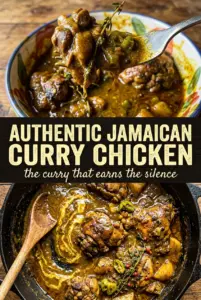
Deep golden curry chicken with tender potatoes and a glossy, spiced gravy earns its place on the table fast. The chicken browns first, the curry gets toasted in the pot, and that one-two move gives the sauce a deeper color and a rounder flavor than a version where everything just simmers together from the start. The potatoes soak up the seasoning, the thyme perfumes the broth, and the whole dish finishes with that steady, comforting heat Jamaican curry is known for.
What makes this version work is the layering. The chicken gets seasoned and rested before it ever hits the pot, which means the flavor goes all the way through the meat instead of sitting on the surface. Browning in batches matters here too; if you crowd the pan, the chicken steams and the sauce loses that rich base. Toasting the curry powder in the oil wakes it up and keeps the finished gravy from tasting flat or raw.
Below, I’ve included the parts that matter most: how to keep the curry from burning, how to control the heat from the Scotch bonnet, and what to do if you need to adjust the thickness of the sauce at the end.
The chicken browned beautifully and the gravy thickened up into that perfect curry sauce that clings to the rice. I left the Scotch bonnet whole like you said, and it had great flavor without blowing out the heat.
Save this Jamaican curry chicken for a deep, glossy gravy and tender potatoes over rice and peas.
The Trick to Jamaican Curry That Stays Bold Instead of Bitter
Jamaican curry powder behaves differently from the mild yellow curry powders used in a lot of other kitchens. It needs heat and oil to bloom, but it can turn harsh if it sits in a dry pot too long. That’s why the curry gets toasted only after the chicken is browned and removed, when there’s enough oil and browned bits in the pot to protect it and deepen the flavor.
The other place people go wrong is rushing the simmer. Once the broth goes in, the sauce should bubble steadily but not violently. A hard boil can make the chicken tough and break the potatoes down before the sauce has had time to thicken. Slow simmering gives you a curry that turns glossy instead of watery.
- Browned chicken — Those dark golden edges build the base flavor. If the pieces are pale, the finished curry tastes flat.
- Toasted curry powder — This wakes up the spice blend and removes that raw, dusty edge. One minute is enough; longer can push it into bitterness.
- Whole Scotch bonnet — Leaving it whole brings pepper flavor without flooding the pot with heat. If you cut it open, the curry gets much hotter, much faster.
- Potatoes — They help thicken the sauce naturally as they simmer and release starch. Yukon Golds hold shape best, but any waxy potato will work.
What Each Ingredient Is Actually Doing in This Curry
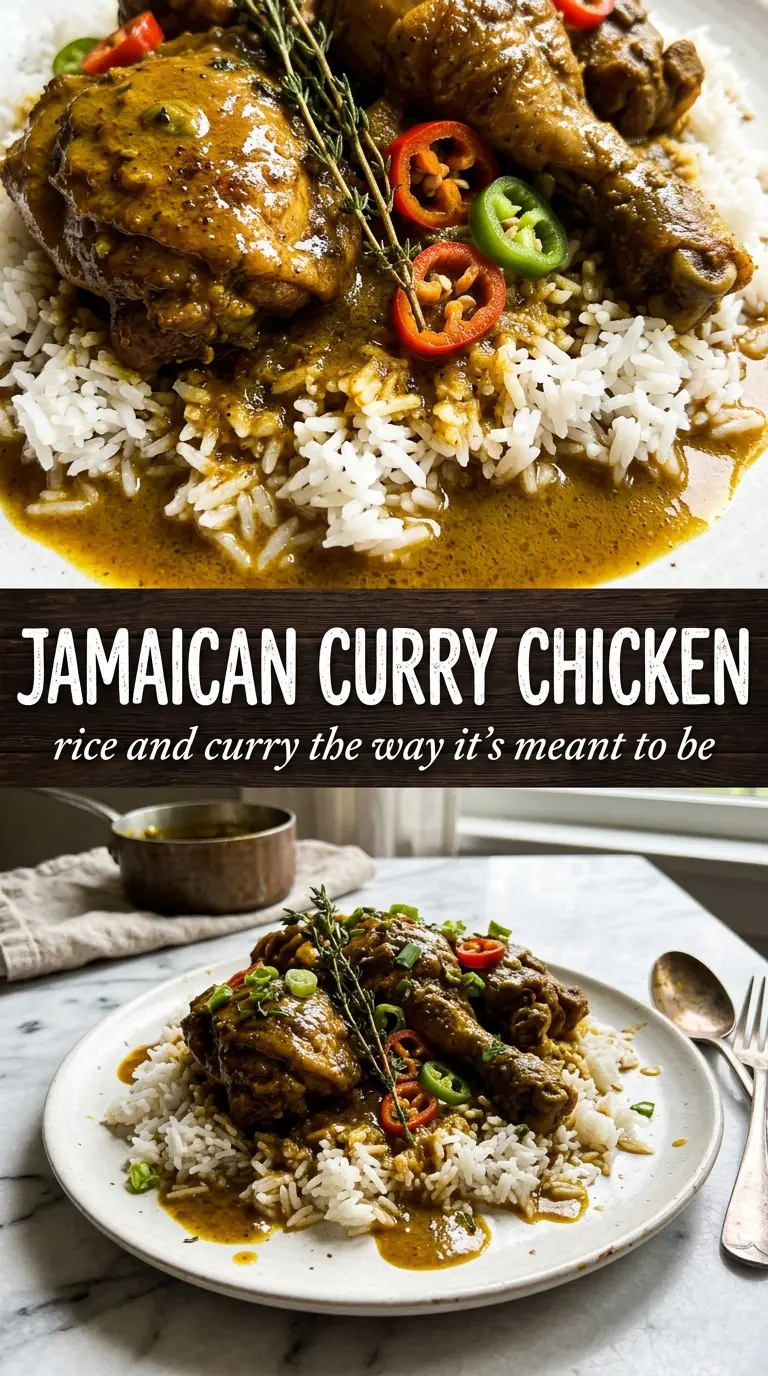
Jamaican curry powder is the backbone here, and it’s the one ingredient worth buying with care. Different blends vary a lot, and the authentic style usually has a warmer, earthier profile than standard supermarket curry powder. If yours is strong and bright yellow, use the full amount. If it smells mild, you may need a little extra salt at the end to keep the flavor from falling flat.
The chicken thighs and drumsticks bring the right amount of fat and structure for a long simmer. Boneless chicken cooks faster, but it won’t give you the same rich gravy or that fall-apart texture on the bone. The potatoes matter too; they soften into the sauce and make the broth feel fuller without turning it into a heavy stew.
- Jamaican curry powder — Use a blend meant for Caribbean cooking if you can. Standard curry powder can work in a pinch, but the flavor will be softer and less distinct.
- Chicken thighs and drumsticks — Bone-in pieces stay juicier and make the broth taste deeper. If you use boneless thighs, cut the simmer time back so they don’t shred too early.
- Fresh thyme — Dried thyme works, but use less because it concentrates fast. Fresh thyme gives the sauce a cleaner, more aromatic finish.
- Chicken broth — Homemade or low-sodium broth gives you more control. If you use a salty broth, hold back on the seasoning until the end.
Building the Curry in Layers, Not at Once
Seasoning and Resting the Chicken
Toss the chicken with the curry powder, all-purpose seasoning, garlic powder, onion powder, salt, and black pepper until every piece is coated. The hour-long rest is where the seasoning starts to soak in, and it also helps the curry powder darken properly when it hits the hot oil. If you skip the rest, the flavor sits on the outside and the chicken tastes underdone even when it’s cooked through.
Browning for Color and Depth
Heat the oil until it shimmers, then brown the chicken in batches. You want deep color on the skin and edges, not a rushed pale sear. If the pot is crowded, the chicken leaks moisture and steams instead of browning, and you lose the foundation that makes the sauce taste slow-cooked.
Blooming the Curry and Starting the Sauce
After the chicken comes out, toast the remaining curry powder in the oil for about a minute, then add the onion. The spice should smell fragrant and a little toasty, never scorched. If it starts sticking or darkening too fast, lower the heat right away; burnt curry powder turns the whole pot bitter.
Simmering Until the Sauce Turns Glossy
Return the chicken to the pot with the garlic, Scotch bonnet, thyme, broth, and potatoes. Bring it to a boil, then lower the heat so the curry simmers gently under the lid. After 35 to 40 minutes, the chicken should pull easily from the bone and the sauce should look slightly thickened and shiny. If it’s too thin, uncover the pot for the last few minutes and let some of the liquid cook off.
How to Adapt This Curry When You Need a Different Path
Milder Heat, Same Jamaican Flavor
Leave the Scotch bonnet whole and remove it after simmering, or use half a habanero if that’s what you have. You’ll still get the pepper aroma in the sauce without the sharp burn that comes from slicing the pepper open.
Dairy-Free and Naturally Gluten-Free
This recipe is already dairy-free and can be gluten-free as long as your all-purpose seasoning and broth are certified gluten-free. The texture doesn’t change at all, which is one reason this curry is such a reliable weeknight main.
Using Boneless Chicken Thighs
Boneless thighs work if you want a faster dinner, but reduce the simmer time and check early so they stay tender. You’ll lose a little of the deep, bone-in flavor, but the sauce will still be rich and spoonable.
Storage and Reheating
- Refrigerator: Store for up to 4 days. The sauce thickens as it chills, which actually helps the flavor settle in.
- Freezer: Freezes well for up to 2 months. Cool it completely first, then freeze in airtight containers with some sauce so the chicken doesn’t dry out.
- Reheating: Warm gently on the stove over low heat with a splash of broth or water. High heat can tighten the chicken and make the potatoes break apart before the sauce loosens.
Answers to the Questions Worth Asking
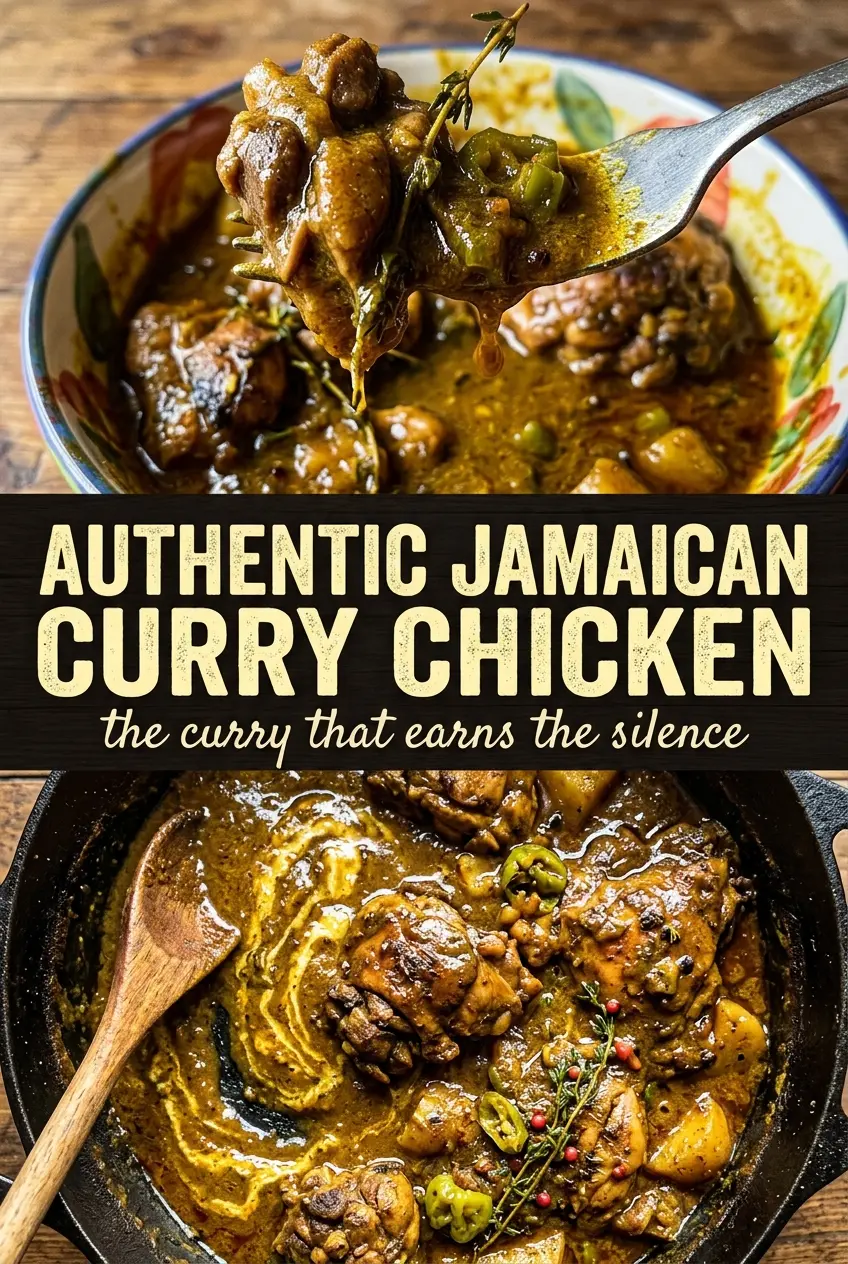
Authentic Jamaican Curry Chicken
Ingredients
Equipment
Method
- Season the chicken with 2 tablespoons Jamaican curry powder, all-purpose seasoning, garlic powder, onion powder, salt, and black pepper, then marinate for at least 1 hour to deepen the flavor.
- Heat vegetable oil in a heavy pot over high heat and brown the chicken in batches on all sides until deeply golden, then remove and set aside.
- In the same pot, toast the remaining Jamaican curry powder in the oil for 1 minute, stirring to prevent scorching.
- Add the sliced onion and cook for 4 minutes until softened and fragrant.
- Add the minced garlic, the whole Scotch bonnet (or habanero), and fresh thyme, then stir for about 30 seconds until aromatic.
- Return the browned chicken to the pot and turn to coat in the spiced onion-garlic mixture.
- Add chicken broth and potato cubes, bring to a boil, then reduce heat, cover, and simmer for 35–40 minutes until the chicken is falling off the bone and the sauce thickens.
- Remove the Scotch bonnet, adjust seasoning to taste, and serve the curry chicken over cooked rice and peas.