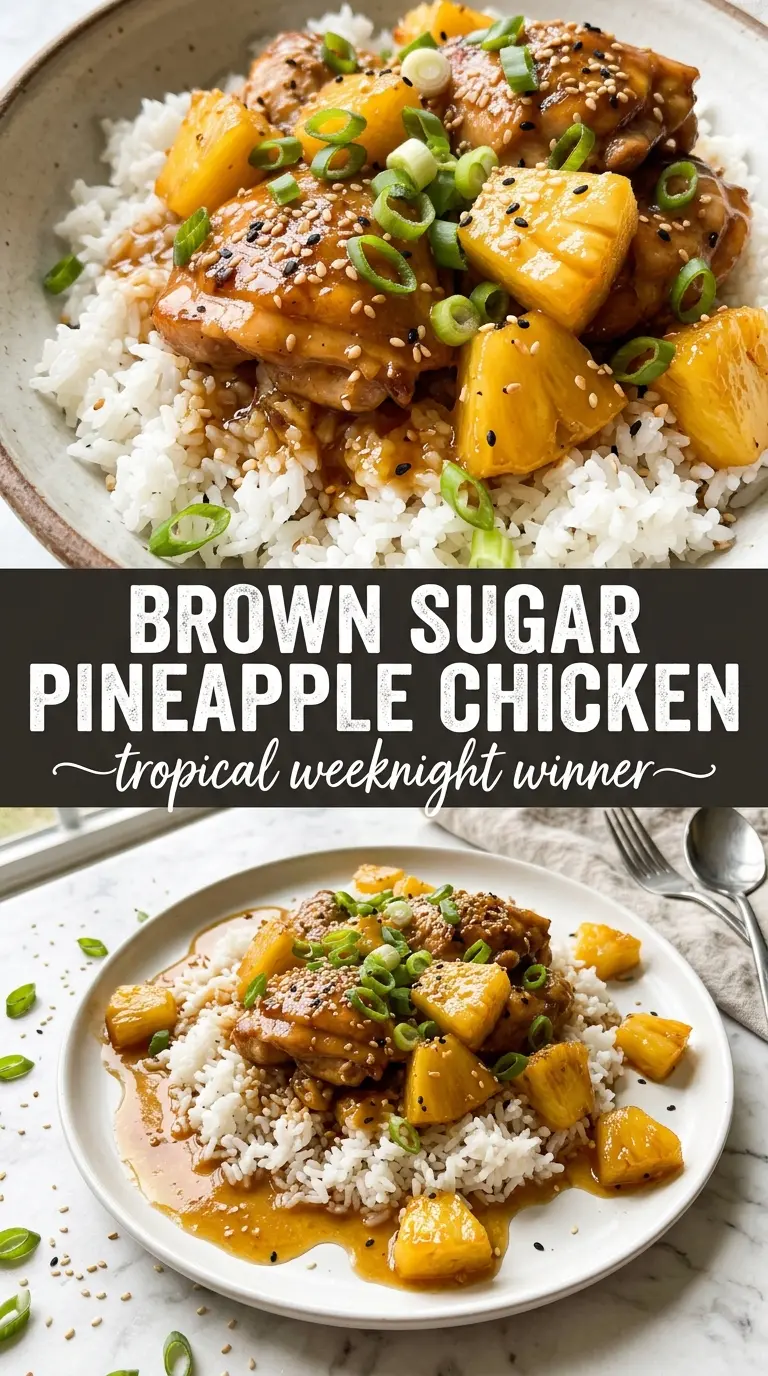
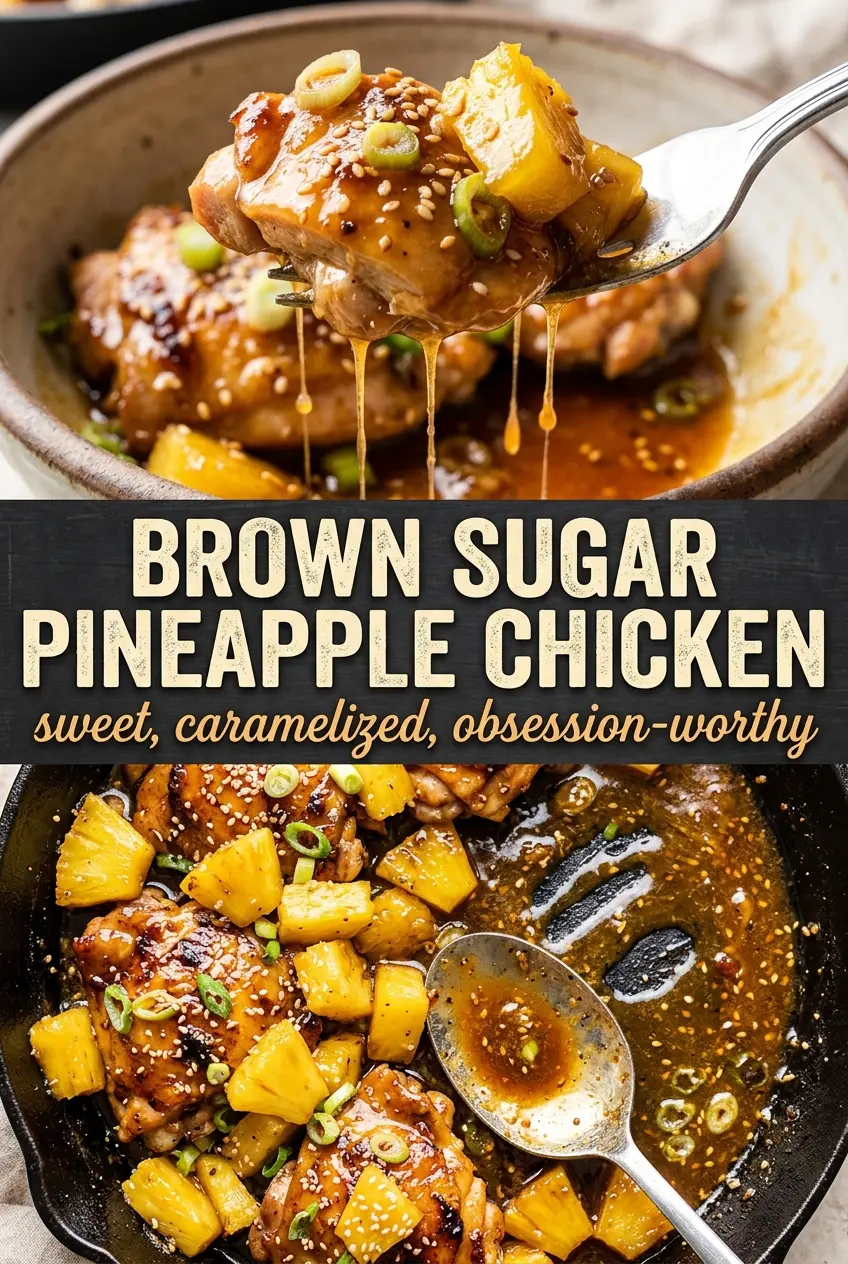
Sticky, glossy brown sugar pineapple chicken earns its spot fast because the sauce clings to the chicken instead of sliding off the plate. The glaze gets that deep amber finish from the mix of pineapple juice, brown sugar, and soy sauce, while the pineapple chunks stay bright enough to cut through the sweetness. You get caramelized edges on the chicken, a tangy-sweet pan sauce, and just enough savoriness to keep every bite balanced.
The part that makes this version work is the order. The chicken gets a hard sear first, which builds flavor in the pan, then the glaze is made right in those same drippings so nothing tastes flat. Cornstarch gives the sauce its body, but it only needs a short simmer to turn shiny and thick; if you cook it too long, it can go past that slick glaze stage and start to look dull. The pineapple chunks go in near the end so they stay tender instead of collapsing into the sauce.
Below, I’m walking through the pan cues that matter most, the ingredient swaps that actually hold up, and the few places where people usually rush and end up with a thin or broken glaze.
The glaze thickened up in just a couple of minutes and coated the chicken like a restaurant sauce. I loved that the pineapple stayed in chunks instead of turning mushy, and my husband asked me to keep this one in the weekly dinner rotation.
Save this brown sugar pineapple chicken for a sticky skillet dinner with caramelized edges and a glossy pineapple glaze.
The Trick to a Glaze That Clings Instead of Pooling
The biggest mistake with pineapple chicken is treating the sauce like it can thicken itself without help. Pineapple juice is watery, and if you skip the cornstarch slurry or rush the simmer, you end up with a sweet pan sauce instead of a glaze that coats the chicken. The goal is a texture that looks almost syrupy when you drag a spoon through it and leaves a clean path for a second before it closes back in.
Seared chicken gives you more than flavor. It also gives the glaze something to stick to. If the pan looks dry after you remove the chicken, that’s fine; the browned bits are what make the sauce taste cooked instead of just mixed together. Once the slurry goes in, the sauce should bubble gently and turn glossy within a couple of minutes. If it looks cloudy and thin, it needs another minute on the heat.
What Each Ingredient Is Actually Doing in the Skillet
- Chicken breasts — Boneless, skinless breasts cook fast and give you a clean base for the glaze. If yours are thick on one end, pound them to an even thickness so the center cooks before the outside dries out.
- Pineapple juice — This is the backbone of the sauce, and bottled juice works fine here. Fresh pineapple juice can be a little sharper, while canned tends to be softer and a bit sweeter, so both are useful depending on the balance you want.
- Brown sugar — This gives the glaze its deep, caramel-like note and helps it thicken into that sticky finish. Packed light or dark brown sugar both work, but dark brown sugar will push the sauce a little richer and darker.
- Soy sauce — This keeps the glaze from tasting one-note sweet. Use regular soy sauce for balance; low-sodium soy sauce is a good swap if you want more control over the salt level.
- Ketchup — It adds body, acidity, and a little tomato depth that rounds out the pineapple. Don’t skip it unless you’re replacing it with another acidic ingredient, because it helps the glaze taste full instead of flat.
- Cornstarch slurry — This is what turns the sauce from thin to clingy. Mix it with cold water before adding it, or it can clump the second it hits the pan.
- Pineapple chunks — They add texture and a burst of brightness at the end. Canned chunks are fine; just drain them well so they don’t water down the glaze.
Building the Sauce After the Chicken Comes Out
Seasoning and Searing
Season the chicken well on both sides before it hits the pan. You want a visible crust and a deep golden surface, not pale chicken that has only barely set. Medium-high heat gives you that color in about 5 to 6 minutes per side, but if the pan starts smoking hard, lower the heat a notch so the seasonings don’t scorch before the center cooks through. Pull the chicken at 165°F and let it rest on a plate while you build the sauce.
Turning the Pan Drippings Into the Glaze
Whisk the pineapple juice, brown sugar, soy sauce, ketchup, garlic, and ginger right into the same skillet. Those browned bits left behind by the chicken are part of the sauce, so don’t wipe them out. Bring the mixture to a steady simmer, not a hard boil; aggressive heat can make the sugar taste harsh and can reduce the liquid too fast before the cornstarch has time to work.
Thickening to a Sticky Finish
Stir in the cornstarch slurry and keep the sauce moving for 2 to 3 minutes. It should go from thin and foamy to glossy and coat the back of a spoon. If it gets too thick before the chicken returns to the pan, add a splash of pineapple juice or water and stir until it loosens. Add the pineapple chunks near the end so they warm through without breaking apart.
Coating the Chicken at the End
Put the chicken back in the pan and spoon the glaze over the top until every piece looks lacquered. Let it cook for another 2 minutes so the chicken picks up the sauce and the glaze clings in a thin, shiny layer. Finish with sesame seeds and green onions while the sauce is still hot enough to grab the garnish. Serve it right away over rice so the sauce has something to soak into.
Three Ways to Adjust the Sweetness, the Heat, or the Texture
Use chicken thighs for a richer, juicier result
Boneless skinless thighs stay juicier and forgive a little extra time on the stove. They’ll give you a slightly richer bite and work especially well if you like the glaze to feel more savory than lean.
Make it gluten-free with one simple swap
Use tamari or a certified gluten-free soy sauce in place of standard soy sauce. The flavor stays almost the same, but you still get the salty backbone that keeps the glaze from tasting sugary.
Add heat without losing the sweet-tangy balance
A pinch of crushed red pepper or a small squeeze of sriracha gives the glaze a little lift. Keep it light; too much heat buries the pineapple and turns the sauce into something sharper than it should be.
Cut the sweetness for a more savory glaze
Reduce the brown sugar by 1 to 2 tablespoons and add an extra teaspoon of soy sauce. That keeps the glaze glossy, but it shifts the finish toward tangy and savory instead of dessert-sweet.
Storage and Reheating
- Refrigerator: Store leftovers in an airtight container for up to 4 days. The glaze will thicken as it chills, which is normal.
- Freezer: It freezes well for up to 2 months, though the pineapple pieces soften a bit after thawing. Freeze in portions with a little extra sauce so the chicken doesn’t dry out later.
- Reheating: Rewarm gently in a skillet over low heat with a splash of water or pineapple juice. High heat can make the sauce stick and tighten too fast, which dries out the chicken before the glaze loosens.
Answers to the Questions Worth Asking
Brown Sugar Pineapple Chicken
Ingredients
Equipment
Method
- Season the chicken breasts with salt, pepper, garlic powder, and smoked paprika, then let them rest for 20 minutes to marinate in the skillet while you prep the glaze ingredients.
- Heat the olive oil in a large cast iron skillet over medium-high heat and sear the chicken for 5-6 minutes per side until golden and cooked through to 165°F.
- Remove the chicken from the skillet and set aside while you make the pineapple glaze in the same pan.
- Whisk pineapple juice, brown sugar, soy sauce, ketchup, garlic, and fresh ginger in the same pan, then bring the mixture to a simmer over medium heat.
- Stir in the cornstarch slurry (cornstarch mixed with water) and cook 2-3 minutes until the sauce thickens to a glaze.
- Add the pineapple chunks and cook until they start to become glossy and warm through, about 1-2 minutes.
- Return the chicken to the skillet and turn to coat in the pineapple glaze.
- Cook the chicken in the glaze for 2 more minutes, so the edges caramelize and the sauce clings to the surface.
- Sprinkle sesame seeds and sliced green onions over the chicken right before serving.
- Serve the brown sugar pineapple chicken over steamed rice so the amber sauce soaks in at the edges.