Golden seared chicken breasts covered in a glossy Boursin sauce are the kind of dinner that looks a lot fancier than the effort it takes. The chicken stays juicy because it’s browned first, then finished in the sauce just long enough to soak up flavor without losing its texture. What you get at the table is tender meat, a creamy herb sauce, and just enough garlic bite to keep every forkful interesting.
The sauce matters here. Boursin melts into broth and cream far more smoothly than a shredded cheese sauce, which means you get a silky finish instead of graininess if you keep the heat in check. A quick deglaze after searing pulls all the browned bits off the pan, and that’s where a lot of the depth comes from. Fresh thyme and cracked pepper give the sauce a clean, savory edge that keeps it from tasting flat.
Below you’ll find the small technique details that make this dish work on a weeknight, plus a few useful swaps for when you need to work with what’s in the fridge.
The sauce turned out smooth and glossy, and the chicken stayed juicy even after simmering back in the pan. I served it over mashed potatoes and my husband kept spooning extra sauce on top.
Save this Boursin chicken for the nights when you want a creamy pan sauce with a restaurant-style finish and almost no cleanup.
The Reason Boursin Stays Silky Instead of Turning Grainy
Boursin behaves better than a lot of soft cheeses in a skillet because it’s already seasoned, already emulsified, and built to melt into a sauce without much drama. The trouble starts when the pan is too hot or the cheese goes in before there’s enough liquid. That’s when the dairy tightens up and the sauce can look broken or speckled instead of smooth.
The fix is simple: use the broth as the melting base, then add the cheese over a gentle simmer, not a hard boil. The cream goes in after the cheese has mostly melted, which gives the sauce body without forcing it. If you rush that part, the sauce can get greasy on top and thin underneath, which is exactly what this method avoids.
- Chicken breasts — Boneless, skinless breasts cook fast and stay elegant here, but they need even thickness. If one end is much thicker, pound it lightly so the pan time is consistent and the meat doesn’t dry out before the center reaches temperature.
- Boursin garlic and herb cheese — This is the backbone of the sauce. A generic herb cream cheese won’t melt as smoothly or bring the same garlic-herb seasoning, so the final sauce will taste flatter and less polished.
- Dry white wine or chicken broth — Wine adds a sharper edge and helps lift the browned bits from the pan, while broth keeps the recipe family-friendly. If you skip the wine, use broth and add a tiny splash of lemon at the end for brightness.
- Heavy cream — Cream rounds out the sauce and gives it that glossy finish. Half-and-half works in a pinch, but the sauce will be looser and a little less luxurious.
What Each Ingredient Is Actually Doing in This Chicken Dish
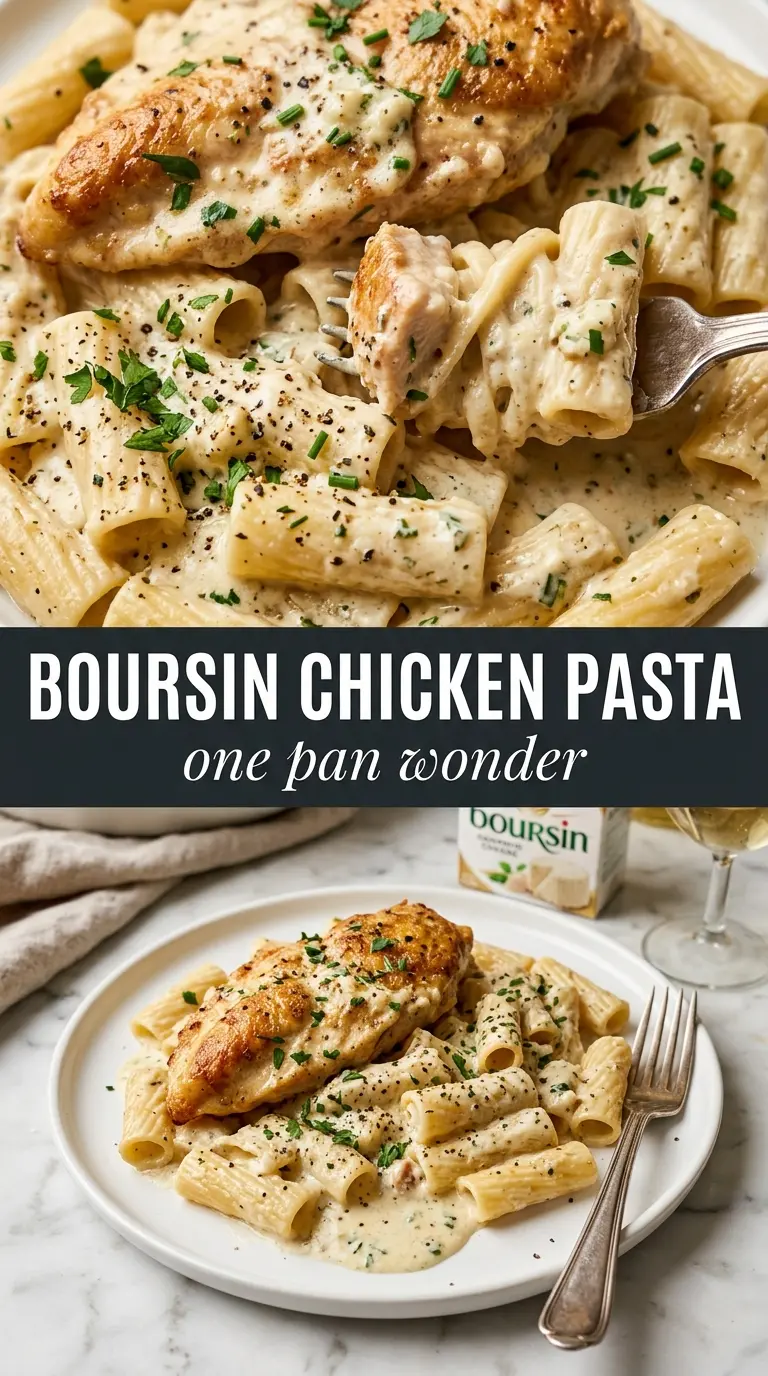
- Chicken (bone-in or boneless, skin-on or skinless) — Each cut has different cooking times and flavor profiles. Let thighs reach 165°F; breasts dry out if overcooked past that.
- Sauce or braising liquid (the moisture keeper) — This prevents the chicken from drying out and adds flavor. Don’t skip it even if the recipe seems moist.
- Aromatics (garlic, onion, herbs) — These add depth and complexity. Cook them with fat so they soften and sweeten instead of staying sharp.
- Cream or butter (optional richness) — These make the dish luxurious. Add to the sauce off the boil so it stays smooth instead of breaking.
- Cheese (if using) — This adds umami and richness. Mix into the sauce or sprinkle on top; either works depending on the dish.
- Acid (lemon, vinegar, wine, or tomato) — This prevents heavy sauces from tasting flat. Add at the end so the brightness doesn’t cook off.
- Proper temperature (165°F is perfect) — Use a thermometer to avoid guessing. Pull slightly early if the chicken will rest or finish in residual heat.
- Resting time (at least 5 minutes) — This lets juices redistribute so the meat stays moist when you cut into it instead of running dry.
How to Build the Sauce Without Losing the Sear
Seasoning and Browning the Chicken
Pat the chicken dry before it hits the pan, then season it well with salt, pepper, and garlic powder. Dry surfaces brown faster, and that first sear gives you the color and flavor base this dish needs. Let the chicken cook undisturbed until it releases cleanly from the skillet; if it sticks, it’s not ready to turn yet. Pull it off once it reaches 165°F, because carrying it further in the sauce can make the meat chalky.
Working the Pan After the Chicken Comes Out
Keep the browned bits in the skillet. Add the garlic to the hot fat for just about 30 seconds, long enough to smell it but not long enough for it to turn bitter. When you pour in the wine or broth, it should sizzle and loosen the pan fond right away. Scrape the bottom with a wooden spoon until the pan looks mostly clean; that’s where the depth of the sauce comes from.
Melting the Boursin Smoothly
Lower the heat before the cheese goes in. Add the broth first, then drop in the Boursin and stir until it melts into a thick, even sauce. If the pan is boiling hard, the cheese can clump or the sauce can separate, so keep it at a steady simmer instead. Once the cream and thyme go in, let the sauce thicken just enough to coat a spoon.
Finishing the Dish
Return the chicken to the pan and spoon sauce over the top so the meat can warm through without overcooking. A few minutes is enough. You want the chicken hot and coated, not simmered to death. Finish with fresh thyme and cracked pepper right before serving so the herbs stay bright and the sauce still looks glossy on the plate.
What to Change When You Want a Different Kind of Creamy Chicken
Make it dairy-free
Use a dairy-free herb spreadable cheese and unsweetened coconut cream or an unsweetened dairy-free cooking cream. The sauce won’t taste exactly like Boursin chicken, but you’ll still get a rich, herb-forward pan sauce with a similar texture. Keep the heat low, because plant-based creams can separate faster than dairy.
Make it gluten-free
This recipe is naturally gluten-free as written, as long as your broth is certified gluten-free. Serve it with potatoes, rice, or gluten-free pasta and you won’t need to change a thing.
Turn it into skillet thighs
Boneless chicken thighs work well if you want a deeper, richer chicken flavor. They usually need a few extra minutes in the pan, but they’re more forgiving than breasts and stay juicy even if you let them simmer a little longer in the sauce.
Use broth only instead of wine
If you don’t cook with wine, use chicken broth and add a small squeeze of lemon at the end. That little bit of acid replaces the brightness wine would have brought, and it keeps the sauce from tasting heavy.
Storage and Reheating
- Refrigerator: Store leftovers in an airtight container for up to 3 days. The sauce thickens as it chills, but it stays flavorful.
- Freezer: It can be frozen, but the sauce may separate a little when thawed. Freeze in portions and thaw overnight in the fridge for the best chance of keeping the texture steady.
- Reheating: Warm gently on the stove over low heat with a splash of broth or cream. High heat is the mistake that makes the sauce split and the chicken dry out.
Answers to the Questions Worth Asking
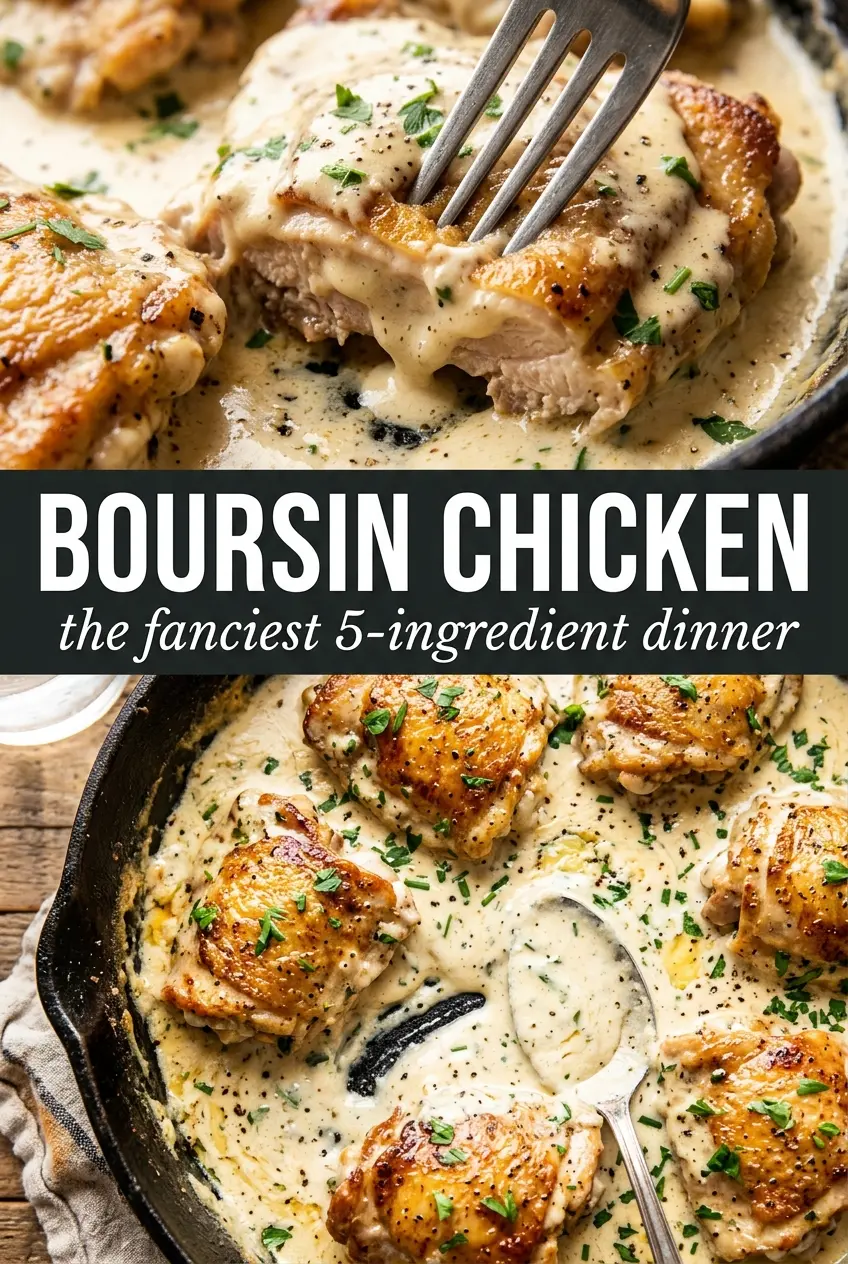
Boursin Chicken
Ingredients
Equipment
Method
- Season the boneless skinless chicken breasts with salt, pepper, and garlic powder. Heat olive oil in a large skillet over medium-high heat and sear the chicken for 5-6 minutes per side until golden and the internal temperature reaches 165°F, then remove to a plate.
- Cook the minced garlic in the same pan for 30 seconds over medium heat, stirring constantly until fragrant. Deglaze with dry white wine and cook for 2 minutes, scraping up any browned bits from the bottom of the pan.
- Pour in the chicken broth and bring to a simmer, then add the Boursin garlic and herb cheese. Stir until completely melted and smooth, with no visible cheese lumps.
- Stir in the heavy cream and fresh thyme leaves, then simmer for 3-4 minutes until the sauce thickens slightly and looks glossy.
- Return the chicken breasts to the pan and spoon the Boursin sauce over each breast. Let the sauce coat the chicken as it warms for about 1 minute.
- Garnish with fresh thyme and serve the creamy herb chicken over mashed potatoes or pasta.