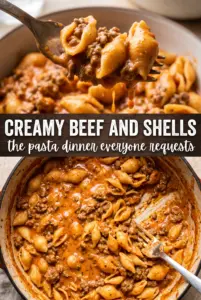
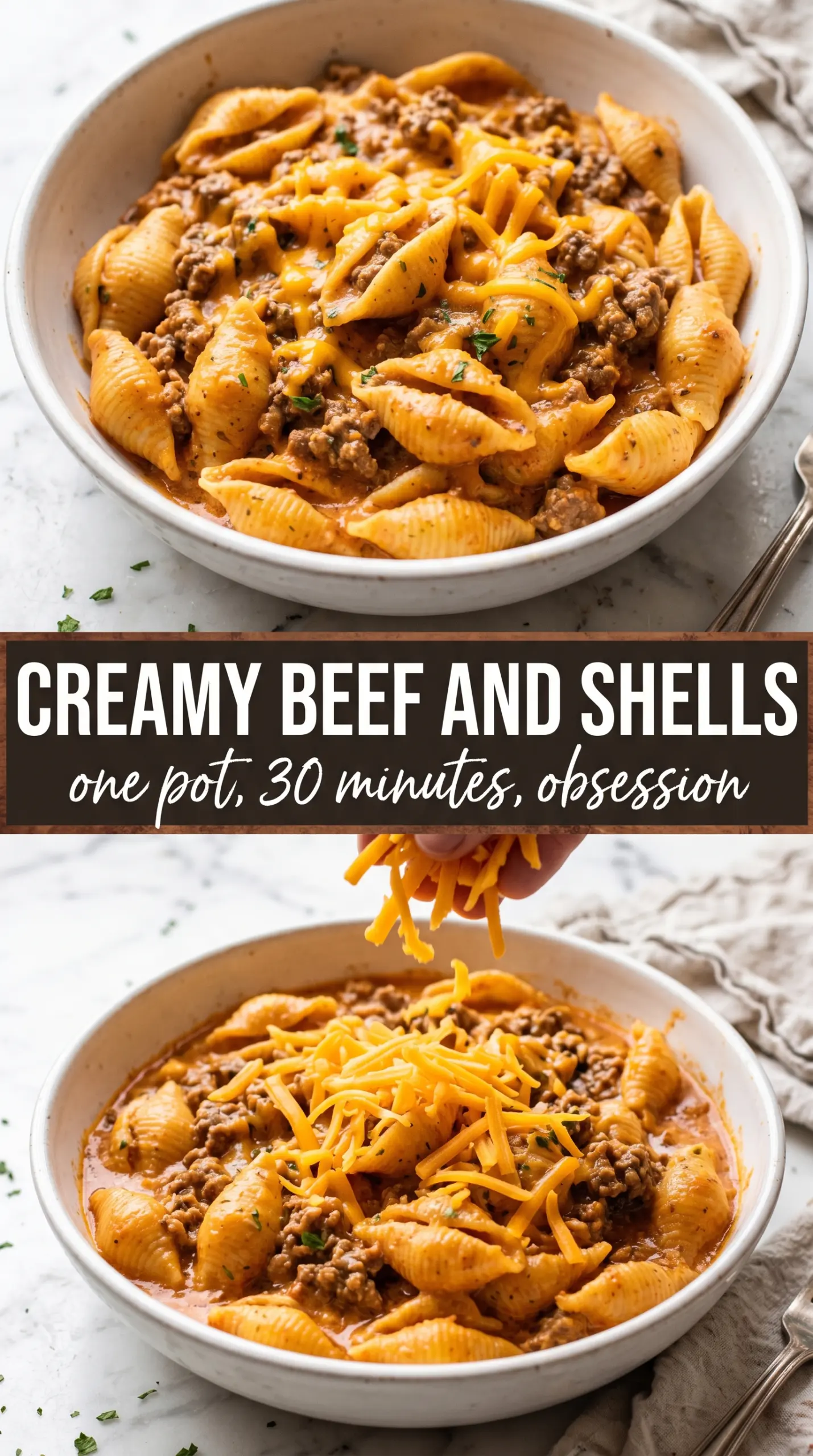
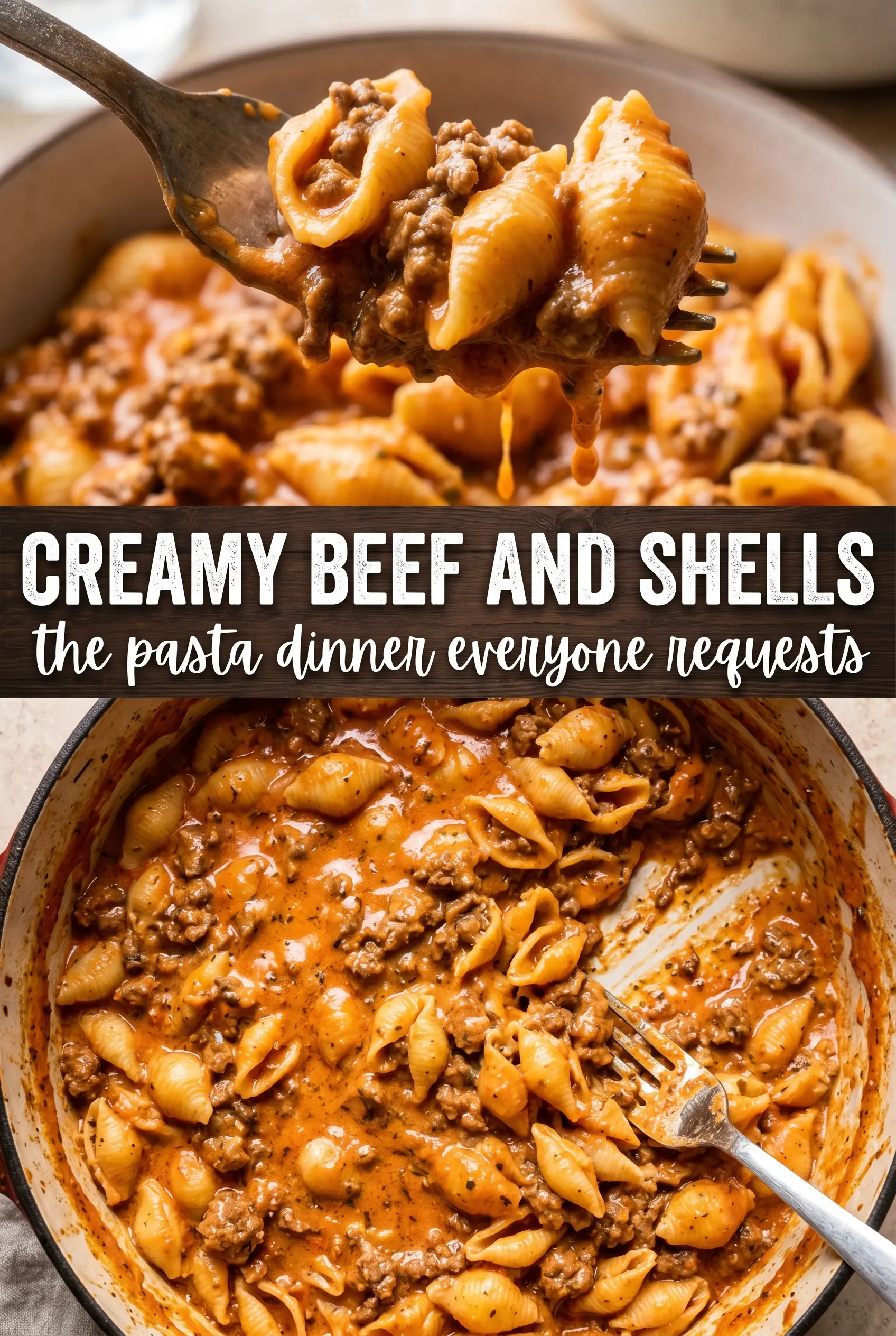
Creamy beef and shells lands in that sweet spot between cozy and practical: enough sauce to coat every piece of pasta, enough beef to make it feel like dinner, and enough cheddar to pull everything together without turning heavy. The shells catch the sauce in their curves, so every bite comes out rich, beefy, and a little bit silky.
What makes this version work is the order. The pasta cooks right in the broth and tomatoes, which means it picks up flavor instead of tasting like plain boiled shells. Then the cream goes in at the end, after the heat drops, so the sauce thickens without splitting. That last step matters more than people think, especially once the cheese is added.
Below, I’m walking through the part that keeps the sauce creamy, the ingredient choices that matter most, and a few easy swaps if you need to adjust the dish for what’s in your kitchen.
The shells held onto the sauce beautifully, and the cheddar melted into a smooth finish instead of getting grainy. I followed the timing exactly and dinner was on the table in under 30 minutes.
Love the creamy beefy shells and that cheddar finish? Save this one for nights when you need a fast skillet dinner with big comfort-food payoff.
Why the Pasta Cooks in the Sauce Instead of in a Separate Pot
Cooking the shells directly in the broth, tomatoes, and seasoning does two jobs at once: it builds flavor and it gives the sauce starch to cling to. If you boil the pasta separately, you lose that thickening power and the final dish can taste a little flat. The sauce also stays more cohesive because the starch from the shells helps marry the tomato base and the cream at the end.
The main thing to watch here is liquid level. Once the pasta goes in, the pan should stay at a lively simmer, not a hard boil. If the heat is too high, the liquid evaporates before the shells are tender and the bottom can scorch before the center of the pasta is done.
- Rotel and diced tomatoes — This combination gives you acidity, body, and a little heat without needing extra chopping or extra seasoning. The diced tomatoes soften into the sauce, while the Rotel adds a brighter, slightly spicier edge.
- Heavy cream — This is what rounds out the sharp tomato flavor and gives the sauce its plush texture. Half-and-half can work in a pinch, but the sauce will be thinner and a little less stable.
- Sharp cheddar — Mild cheddar melts smoothly, but sharp cheddar gives the dish the punch it needs to stand up to the beef and tomatoes. Shred it yourself if you can; pre-shredded cheese often carries anti-caking starch that makes the sauce less silky.
- Shell pasta — Medium shells are the best shape here because they trap the sauce inside and between the folds. If you swap in another short pasta, pick something with ridges or curves, not a smooth noodle.
What Each Ingredient Is Actually Doing in This Beef Dish
- Beef (the protein star) — Quality matters here. Choose cuts with enough marbling to stay tender and juicy.
- Sear on high heat (the first step) — This creates a crust that locks in juices and builds pan flavor for the sauce.
- Sauce or braising liquid (the moisture and flavor) — This becomes part of the finished dish. Balance richness with acid so it doesn’t taste one-dimensional.
- Aromatics (onion, garlic, herbs) — These add complexity and sweeten as they cook. Cook them with fat so flavors deepen.
- Broth or wine (the body) — This carries flavors and prevents the dish from tasting dry. Reduce slightly so flavors concentrate.
- Spices or seasonings (the personality) — Build flavor into the dish early, not just at the end. Layer seasoning so every element tastes intentional.
- Acid (tomato, vinegar, or wine) — This brightens rich beef flavors and prevents satiation. Add at the end to preserve freshness.
- Rest before serving (the final step) — Let the beef rest so juices redistribute. Cutting too soon loses all those flavorful juices to the plate.
Getting the Sauce Creamy Without Breaking It
Brown the Beef First
Start with the ground beef in a deep skillet and let it get enough color before you add anything else. You want browned bits on the bottom, not pale crumbles, because those bits are the base of the finished sauce. If the pan looks watery, keep cooking until the moisture evaporates and the beef starts sizzling again. Drain off excess fat if there’s a lot pooled in the pan, but leave a little behind for flavor.
Build the Tomato Base Around the Pasta
Once the onion softens and the garlic smells fragrant, add the uncooked shells, broth, tomatoes, Rotel, and seasonings all at once. Stir well so the pasta sits under the liquid as evenly as possible. Bring it to a boil only long enough to get things moving, then drop it to medium-low and cover it. The pasta should be tender and the liquid mostly absorbed by the end of the cooking time; if it’s still soupy, uncover for a few extra minutes.
Finish With Cream and Cheese Off the Heat
Heavy cream goes in after the pasta is cooked and the burner is turned down. That keeps the sauce smooth. Let it simmer uncovered just long enough to thicken slightly, then remove the pan from the heat before adding the cheddar. If the cheese goes in over high heat, it can turn grainy instead of melting into a glossy sauce. Stir until it disappears completely, then serve right away while the shells are still saucy.
How to Adapt Creamy Beef and Shells Without Losing the Texture
Swap in ground turkey for a lighter skillet dinner
Ground turkey works well here, but it needs a little help because it brings less fat and less built-in flavor than beef. Add a touch more oil when browning, and don’t skip the smoked paprika and onion, since they carry more of the savory depth once the beef is gone. The result is still creamy and satisfying, just a little cleaner and less rich.
Make it gluten-free with a sturdy short pasta
Use a gluten-free medium shell or another short pasta with similar shape, but watch the liquid closely because gluten-free pasta can soften faster and break down sooner. Start checking a few minutes early, and stir gently so the shells don’t tear. The sauce still thickens nicely, but it may need a splash more broth near the end if the pasta drinks up too much liquid.
Use half-and-half instead of heavy cream
Half-and-half will lighten the sauce, but it won’t thicken as deeply and it’s a little more likely to feel thin once the cheese melts in. Keep the simmer gentle and let it reduce uncovered for an extra minute or two before adding cheddar. The texture will be a bit looser, but the flavor stays in the same lane.
Add extra vegetables without watering it down
Diced bell peppers or mushrooms can go in with the onion, but give them enough time to cook off their moisture before the broth goes in. If you add watery vegetables too late, the sauce turns loose instead of creamy. This is the best way to stretch the skillet without losing that rich, clingy finish.
Storage and Reheating
- Refrigerator: Store in an airtight container for up to 4 days. The pasta will absorb more sauce as it sits, so it gets thicker by the next day.
- Freezer: It freezes, but the cream sauce can lose some of its smoothness after thawing. For best results, freeze in portions and stir well as it reheats.
- Reheating: Warm it gently on the stove or in the microwave with a splash of broth or milk. High heat is the fastest way to make the sauce separate or make the pasta go soft and gummy.
Answers to the Questions Worth Asking
Creamy Beef and Shells
Ingredients
Equipment
Method
- Brown the ground beef in a large deep skillet over medium-high heat, breaking it apart until no longer pink, then drain excess fat.
- Add the diced onion and cook for 3 minutes until softened, then add the minced garlic and cook 1 minute.
- Add the uncooked shell pasta, beef broth, diced tomatoes, Rotel, Italian seasoning, smoked paprika, salt, and black pepper, then stir to combine.
- Bring to a boil, reduce heat to medium-low, cover, and cook for 12–15 minutes until pasta is tender and most liquid is absorbed.
- Stir in the heavy cream and simmer uncovered for 2–3 minutes until the sauce thickens.
- Remove from heat and stir in the shredded cheddar until fully melted, then serve immediately.