Ingredients
Equipment
Method
Season and prep glaze
- Season the pork tenderloin with salt and black pepper, rubbing evenly over the entire surface.
- Whisk apple butter, Dijon mustard, apple cider vinegar, soy sauce, minced garlic, cinnamon, and nutmeg until smooth and thick.
Slow cook
- Place the pork in the slow cooker and pour apple cider or chicken broth around it to create steam and moisture.
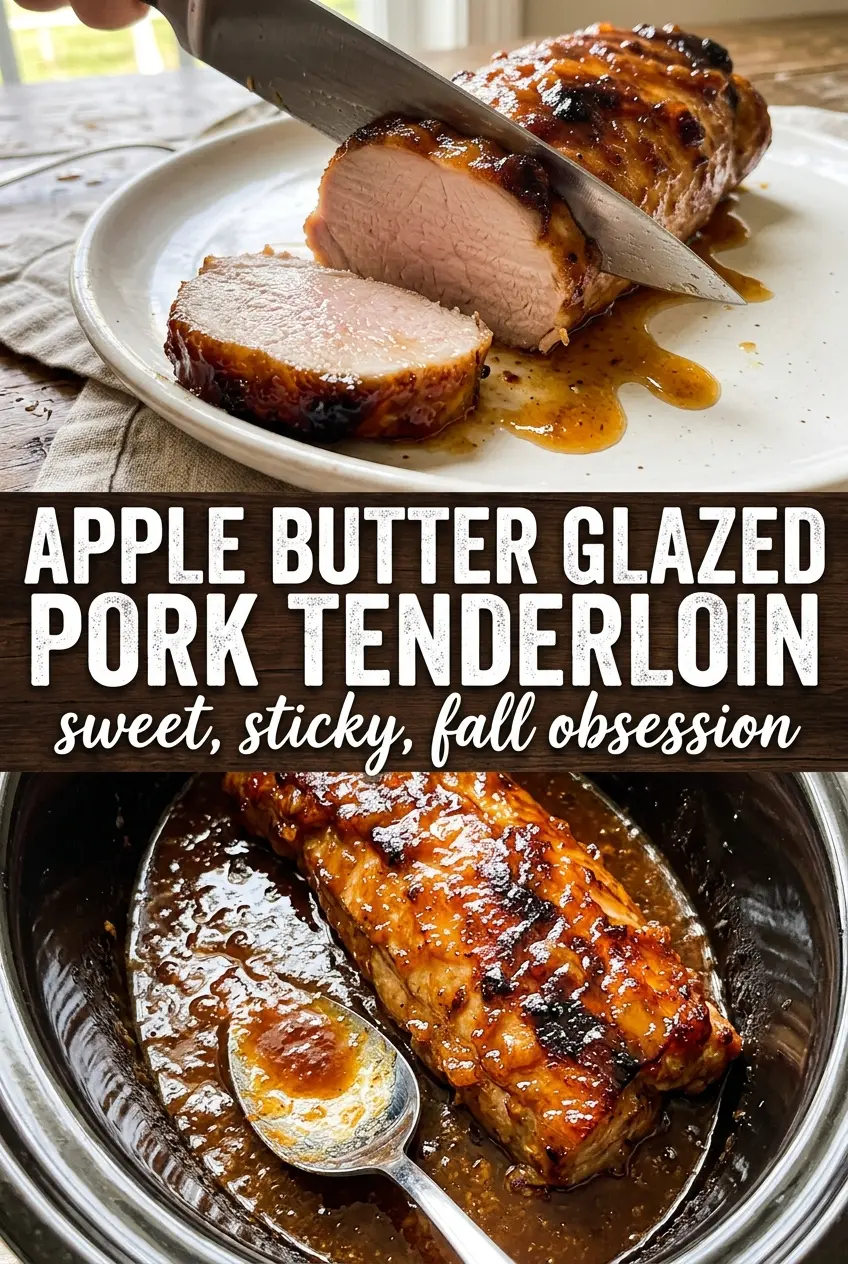
- Brush the apple butter glaze generously all over the surface of the pork so it coats the top and sides.
- Cook on low for 4–5 hours (or high for 2–2.5 hours) until the internal temperature reaches 145°F, with the glaze looking glossy and darker.
Slice and serve
- Let the pork rest for 5 minutes before slicing so the juices redistribute and the slices stay tender.
- Spoon the remaining sauce from the slow cooker over the sliced pork, then garnish with fresh thyme for a bright finish.
Notes
For best glaze coverage, brush the apple butter mixture on after the pork is set in the slow cooker so it clings as the surface warms. Refrigerate leftovers in a sealed container for up to 3–4 days; reheat gently in a covered pan or microwave. Freezing is not recommended because apple butter glaze can change texture after thawing. For a lower-sodium option, use low-sodium soy sauce and reduce added salt slightly.