Rigatoni coated in a thick ranch cream sauce has a way of disappearing fast, especially when the pasta catches little pockets of cheddar and the bacon stays crisp enough to crack between your teeth. This is the kind of dinner that tastes like you put in more effort than you did, which is exactly why it earns a permanent spot in the weeknight rotation.
The sauce works because it starts with cream and broth before the cheese goes in, so the dairy has a chance to warm gently instead of seizing or turning grainy. Ranch seasoning brings the salt, herbs, and tang in one move, while the shredded chicken soaks up the sauce without drying out. Using a sturdy pasta shape like rigatoni gives the sauce somewhere to cling, and that matters more here than it would in a thinner noodle dish.
Below, I’ll show you the timing that keeps the cheese smooth, how to keep the sauce from tightening up too fast, and the small swap that still gives you a rich, weeknight-friendly result when you need to work with what’s in the fridge.
The sauce thickened up perfectly and stayed creamy even after I added the chicken and bacon. I used rigatoni like suggested, and every bite had that ranch-cheddar coating instead of the sauce sinking to the bottom.
Creamy Chicken Bacon Ranch Pasta has the kind of thick, cheesy sauce that coats every tube of rigatoni, so it’s worth pinning for the nights when you want dinner to feel bold without extra fuss.
The Reason the Sauce Stays Creamy Instead of Turning Heavy
The difference here is timing. Ranch seasoning goes into the warm cream and broth before the cheese, which gives the sauce a chance to season and thicken evenly instead of clumping up around cold powder. Once the cheddar and parmesan go in, the heat needs to stay gentle. High heat after the cheese hits the pot is the fastest way to get a sauce that looks broken or greasy.
Another thing that helps is the pasta shape. Rigatoni and penne both hold onto the sauce, but rigatoni gives you those bigger ridges and hollow centers that trap chicken, bacon, and cheese in the best way. If your sauce seems a little too thick before the pasta goes back in, that’s normal. The starch from the pasta water loosens it just enough and helps everything cling together instead of separating.
What Each Ingredient Is Actually Doing in This Dish
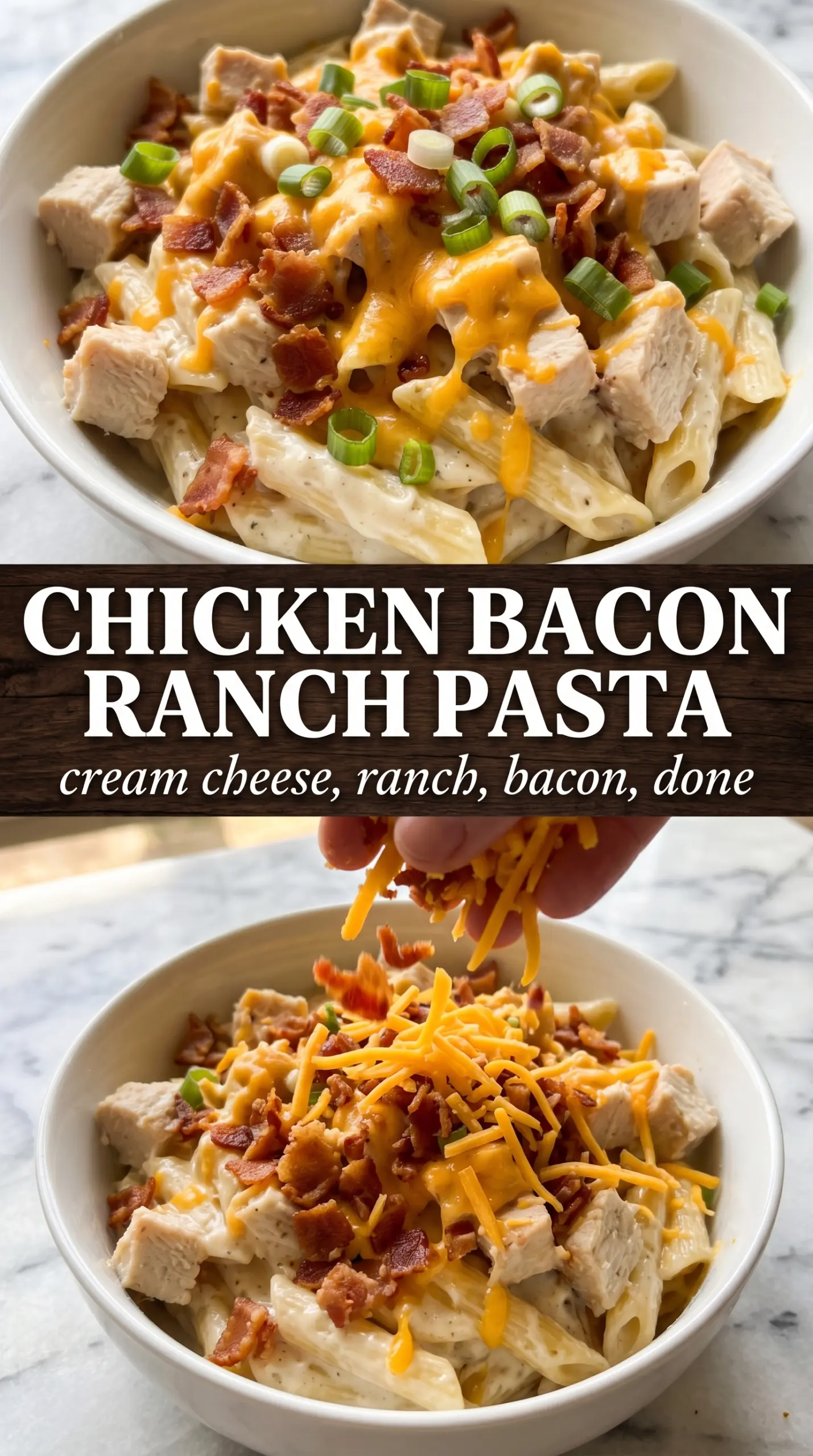
- Rigatoni or penne — You want a short pasta with ridges and a sturdy bite. Long noodles don’t carry this sauce as well, and softer shapes can collapse under the weight of the cream and cheese.
- Heavy cream — This is the base that gives the sauce its body. Half-and-half will work in a pinch, but the sauce will be thinner and more likely to need extra simmer time.
- Chicken broth — It lightens the cream just enough so the final sauce doesn’t feel like pure dairy. Use a low-sodium broth if your ranch mix and bacon are on the salty side.
- Ranch seasoning mix — This is where the herb, garlic, onion, and tangy ranch flavor comes from in one easy step. Homemade ranch seasoning can work, but it needs enough salt and dried herbs to stand in for the packet.
- Sharp cheddar and parmesan — Cheddar gives you the melt and the richness; parmesan adds a salty edge and keeps the sauce from tasting flat. Grate both fresh if you can, because pre-shredded cheese often has anti-caking starches that make the sauce a little grainier.
- Bacon — Crisp bacon gives the dish its best contrast. Add it at the end so it stays crunchy instead of soaking up sauce and turning soft.
- Shredded chicken — Cooked chicken breast or rotisserie chicken both work well here. Shred it into bite-size pieces so it tucks into the pasta instead of sitting in clumps.
Getting the Sauce to Coat Every Piece of Pasta
Start with the pasta water
Cook the pasta until it’s al dente, then reserve some of the starchy water before draining. That water is insurance for the sauce; it helps loosen the mixture without thinning the flavor the way plain water would. If you forget to save it, you’ll end up chasing the right texture with more cream, which only makes the dish heavier.
Build the sauce gently
Sauté the garlic for just a minute, until it smells fragrant and the edges are barely taking on color. Then add the cream and broth and bring them to a simmer, not a hard boil. A steady simmer is enough to thicken the liquid; if it boils aggressively, the dairy can separate and the garlic can turn sharp.
Let the cheese melt off the heat
Once the ranch seasoning is in and the sauce has thickened slightly, add the cheddar and parmesan in handfuls while stirring. If the pan is screaming hot, pull it off the burner for a moment before the cheese goes in. That pause keeps the sauce smooth and glossy instead of stringy or greasy.
Finish with the pasta and chicken
Return the drained pasta to the pot with the chicken and toss until every piece is coated. Add a splash of pasta water if the sauce tightens up before it reaches the texture you want. The final bowl should look lush and clingy, not soupy, and the bacon belongs on top at the very end so it keeps its crunch.
How to Adapt This for a Few Different Kitchens
Dairy-Light Version with Half-and-Half
You can swap the heavy cream for half-and-half, but the sauce will be thinner and need a little more simmering before the cheese goes in. Keep the heat low and use the pasta water sparingly, since this version can loosen faster than the original.
Gluten-Free Pasta Swap
Use a sturdy gluten-free short pasta and cook it just until tender, because many GF pastas go soft fast once they hit the sauce. Save a little cooking water the same way you would with regular pasta, but taste before adding extra salt since some gluten-free brands absorb seasoning differently.
Make It a Little Lighter
Cut the bacon to 4 strips and use only 1 cup of cheddar if you want the dish to feel less heavy while keeping the ranch-chicken backbone intact. You’ll lose some of the richness, but the sauce still tastes full if you keep the parmesan and don’t overcook the pasta.
Storage and Reheating
- Refrigerator: Store in an airtight container for up to 4 days. The sauce will thicken as it chills.
- Freezer: It freezes, but the dairy sauce can turn a little grainy after thawing. If you do freeze it, cool it completely first and thaw overnight in the fridge.
- Reheating: Warm it gently on the stove or in the microwave with a splash of broth or cream. Stir often and keep the heat low, because aggressive reheating is what makes the sauce separate and the pasta go mushy.
Answers to the Questions Worth Asking
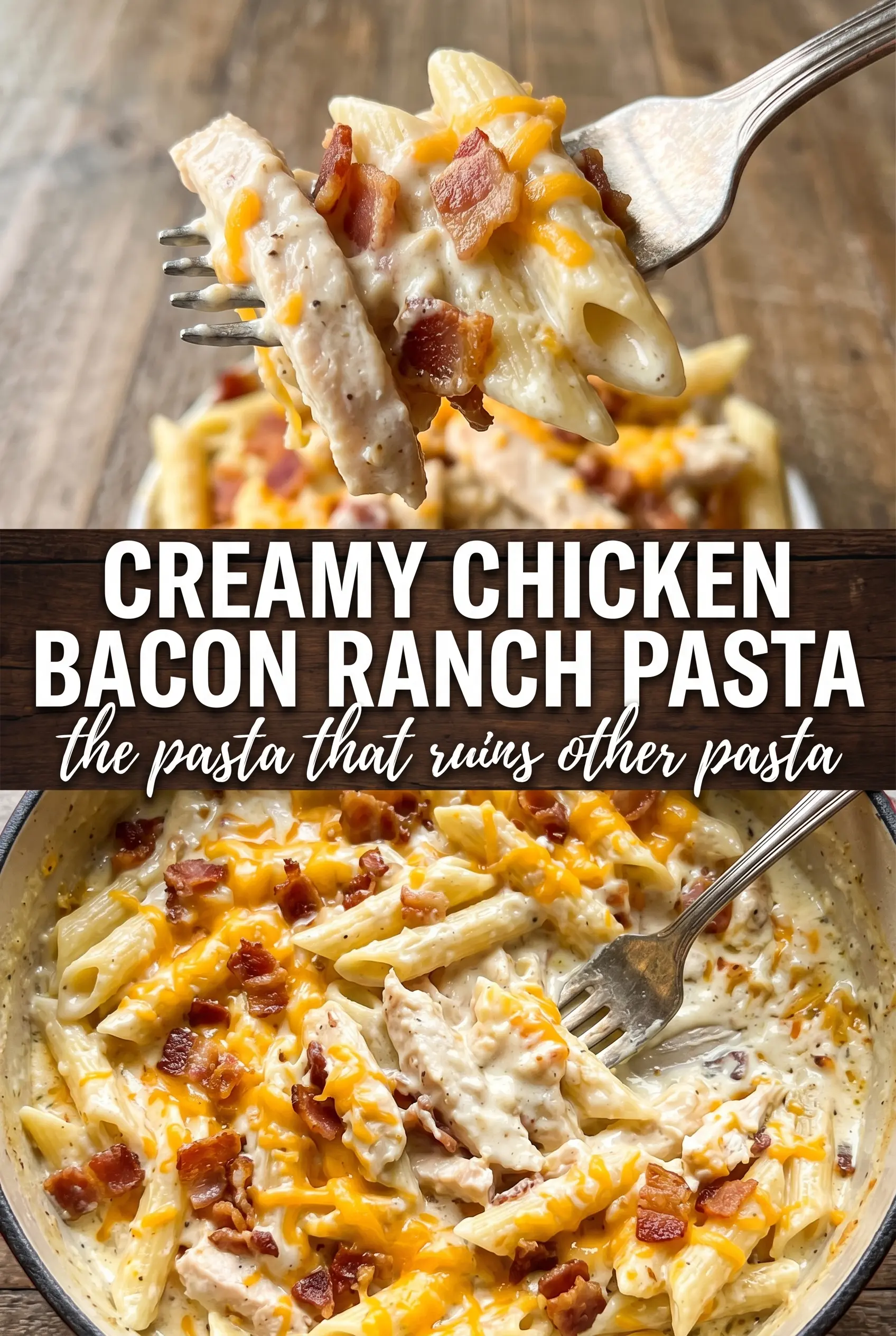
Creamy Chicken Bacon Ranch Pasta
Ingredients
Equipment
Method
- Bring a large pot of salted water to a boil and cook the rigatoni or penne until al dente, then reserve 1/2 cup pasta water and drain. Use a quick taste test so the pasta still feels firm in the center.
- In the same pot over medium heat, sauté the minced garlic for 1 minute until fragrant. Watch for a light sizzle without browning.
- Add the heavy cream and chicken broth and bring to a simmer, stirring to combine. Keep it at a gentle simmer so the sauce starts to thicken.
- Stir in the ranch seasoning mix and simmer for 3–4 minutes until slightly thickened. The sauce should coat the back of a spoon.
- Add the shredded cheddar and grated parmesan, then stir until fully melted and smooth. Turn off the heat as soon as the cheese disappears so it stays creamy.
- Return the drained pasta to the pot, add the shredded chicken, and toss to coat, loosening with reserved pasta water if needed. Stop when the noodles look glossy and the chicken is evenly distributed.
- Top with crumbled bacon and fresh chives, season with salt and black pepper to taste, and serve immediately. Finish while the sauce is still bubbling and thick.